
NSPCC





KARATE


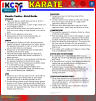
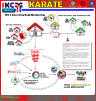
Click on images to enlarge

Welcome to the website of the
Independent karate Clubs (IKC)
Our Aims and Objectives
Safeguarding Children
Chief Instructor
Lesley Constable - Darrington
6
th
Dan Wado-Ryu
Welcome to IKC
to organise and administer instruction in karate including participation in courses and
tournaments throughout the United Kingdom and world-wide.
to promote and enhance the image of karate and encourage participation in the activity;
o
r
g
a
n
i
s
e
a
c
t
i
v
i
t
i
e
s
w
h
i
c
h
w
i
l
l
b
e
o
f
b
e
n
e
f
i
t
t
o
a
l
l
I
K
C
m
e
m
b
e
r
s
?
establish and encourage the participation of all in the activities organised by IKC regardless
of age, race, gender or disabilities and e
n
c
o
u
r
a
g
e
a
n
d
d
e
v
e
l
o
p
K
a
r
a
t
e
i
n
t
h
e
l
o
c
a
l
c
o
m
m
u
n
i
t
y
.
to improve the standards of karate and self defence skills of all members of the IKC.
to offer support and listen to the needs of all member organisations of the IKC in all aspects
of karate from Sport to Traditional, from the youngest beginner to the most senior instructor.


We take the welfare of all
children seriously and
have a comprehensive
which has a clear
framework outlining the
legal requirements
regarding working with
children and vulnerable
adults.
ALL of our Coaches and
Assistant Coaches of IKC
clubs have been checked
with the DBS and have
recieved ‘Safeguarding’
training.

Click on images to enlarge
Click on images to enlarge






Click on images above for link

- Home
- IKC History
- Introduction to Karate
- Karate History
- Other Karate Styles
- Coaching
- Training
- What Will You Learn
- Fitness
- Diversity
- Coaching Children
- Coaching Children Cont'd
- Smart Ideas
- Competition Karate
- Kumite Etiquette
- Kumite Tactics Brief Guide
- Join a Club
- IKC Membership
- IKC Contacts
- Safegurding Contacts
- IKC Documents Policies
- Clothing Equipment
- Chief IKC Instructor Profile
- Senior IKC Instructor Profile
- Info & other sites


KARATE



Welcome to the website of the
Independent karate Clubs (IKC)
Our Aims and Objectives
to organise and administer instruction in karate including
participation in courses and tournaments throughout the
United Kingdom and world-wide.
establish and encourage the participation of all in the
activities organised by IKC regardless of age, race, gender
or disabilities and e
n
c
o
u
r
a
g
e
a
n
d
d
e
v
e
l
o
p
K
a
r
a
t
e
i
n
t
h
e
l
o
c
a
l
c
o
m
m
u
n
i
t
y
.
to improve the standards of karate and self defence skills
of all members of the IKC.
to offer support and listen to the needs of all members of
the IKC in all aspects of karate from the youngest beginner
to the most senior instructor.


Click on images to enlarge







- Home
- IKC History
- Introduction to Karate
- Karate History
- Other Karate Styles
- Coaching
- Training
- What Will You Learn
- Fitness
- Diversity
- Coaching Children
- Coaching Children Cont'd
- Smart Ideas
- Competition Karate
- Kumite Etiquette
- Kumite Tactics Brief Guide
- Join a Club
- IKC Membership
- IKC Contacts
- Safegurding Contacts
- IKC Documents Policies
- Clothing Equipment
- Chief IKC Instructor Profile
- Senior IKC Instructor Profile
- Info & other sites
NSPCC
KARATE
IKC History
Founders of IKC
Ilford Karate Clubs
Ilford Karate Clubs
becomes ‘Independent
Karate Clubs’ (1995)
O
u
r
O
r
g
ani
s
ation
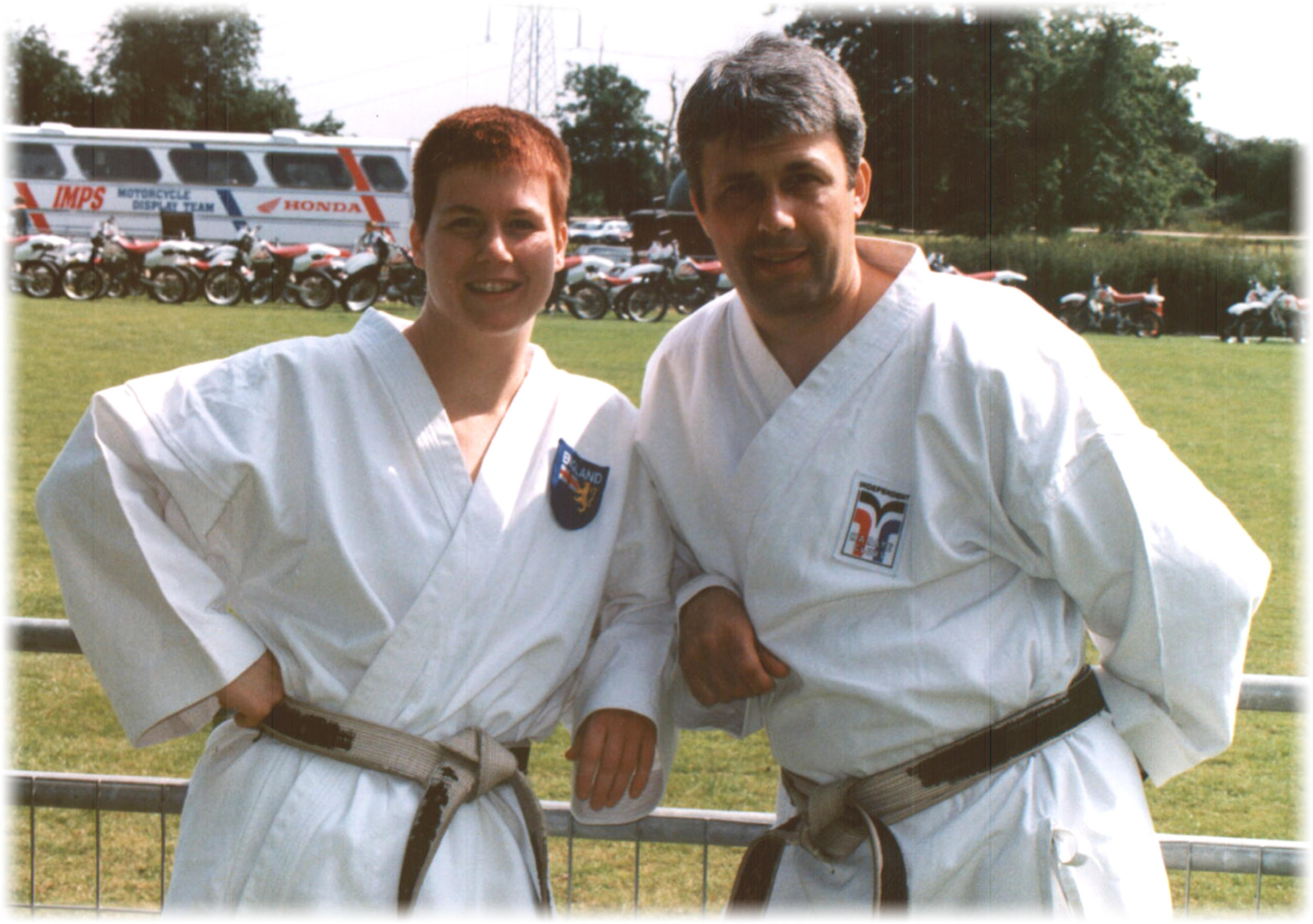
Sensei Lesley Darrington (Constable) BA Hons
6
th
dan Wado-Ryu
Sensei Colin Constable BA Hons QTS
4th dan Wado-Ryu
IKC was originally known as Ilford Karate Clubs.
Sensei Colin started the first club under the Bushi-Kai
banner at the Frenford Club, Seven Kings, Ilford, Essex
in 1986.
Sensei Lesley started the second club soon after at
the Mildmay Youth Centre, Ilford, Essex in 1987 as
part of B.O.S.K.F.
After affiliating to other karate organisations over
several years, Ilford Karate Clubs eventually went on to
form their own association; ‘Independent Karate Clubs’.
IKC is now an Association Member of the English Karate
Federation (EKF). IKC provides Club and Group
membership opportunities for ‘ALL STYLES’ where
support, advice, guidance, training and senior gradings
are available to everyone.
The IKC is a friendly, approachable association with
many years of experience between its instructors and
member groups.
T
h
e
f
o
u
n
d
e
r
s
o
f
t
h
e
o
r
g
a
n
i
s
a
t
i
o
n
, L
e
s
l
e
y
D
a
r
r
i
n
g
t
o
n
(
C
o
n
s
t
a
b
l
e
)
6
th
d
a
n
a
n
d
C
o
l
i
n
C
o
n
s
t
a
b
l
e
4
th
d
a
n
, have
b
e
t
w
e
e
n
t
h
e
m
,
o
v
e
r
6
0
y
e
a
r
s
’
e
x
p
e
r
i
e
n
c
e
i
n
K
a
r
a
t
e
.
S
e
n
s
e
i
L
e
s
l
e
y
i
s
a
w
o
r
l
d
c
l
a
s
s
K
a
r
a
t
e
p
r
a
c
t
i
t
i
o
n
e
r
w
h
o
h
a
s
m
a
n
y
W
o
r
l
d
,
E
u
r
o
p
e
a
n
a
n
d
U
K
t
i
t
l
e
s
i
n
b
o
t
h
K
u
m
i
t
e
a
n
d
K
a
t
a
; and Sensei Colin qualified as a British Karate
Referee. Both are qualified School Teachers.
Share Our
IKC Website
Click on image to enlarge





- Home
- IKC History
- Introduction to Karate
- Karate History
- Other Karate Styles
- Coaching
- Training
- What Will You Learn
- Fitness
- Diversity
- Coaching Children
- Coaching Children Cont'd
- Smart Ideas
- Competition Karate
- Kumite Etiquette
- Kumite Tactics Brief Guide
- Join a Club
- IKC Membership
- IKC Contacts
- Safegurding Contacts
- IKC Documents Policies
- Clothing Equipment
- Chief IKC Instructor Profile
- Senior IKC Instructor Profile
- Info & other sites
KARATE
IKC History
Founders of IKC
Ilford Karate Clubs
Ilford Karate Clubs
becomes
‘Independent
Karate Clubs’
(1995)
O
u
r
O
r
g
ani
s
ation
Sensei Lesley Constable - Darrington BA Hons
6
th
dan Wado-Ryu
Sensei Colin Constable BA Hons QTS
4th dan Wado-Ryu
IKC was originally known as
Ilford Karate Clubs. Sensei Colin
started the first club under the
Bushi-Kai banner at the Frenford
Club, Seven Kings, Ilford, Essex
in 1986.
Sensei Lesley started the second
club soon after at the Mildmay
Youth Centre, Ilford, Essex in
1987 as part of B.O.S.K.F.
After affiliating to other karate
organisations over several years,
Ilford Karate Clubs eventually
went on to form their own
association; ‘Independent Karate
Clubs’.
IKC is now an Association
Member of the English Karate
Federation (EKF). IKC provides
Club and Group membership
opportunities for ‘ALL STYLES’
where support, advice, guidance,
training and senior gradings are
available to everyone.
The IKC is a friendly,
approachable association with
many years of experience
between its instructors and
member groups.
T
h
e
f
o
u
n
d
e
r
s
o
f
t
h
e
o
r
g
a
n
i
s
a
t
i
o
n
, L
e
s
l
e
y
D
a
r
r
i
n
g
t
o
n
(
C
o
n
s
t
a
b
l
e
)
6
th
d
a
n
a
n
d
C
o
l
i
n
C
o
n
s
t
a
b
l
e
4
th
d
a
n
, have
b
e
t
w
e
e
n
t
h
e
m
,
o
v
e
r
6
0
y
e
a
r
s
’
e
x
p
e
r
i
e
n
c
e
i
n
K
a
r
a
t
e
.
S
e
n
s
e
i
L
e
s
l
e
y
i
s
a
w
o
r
l
d
c
l
a
s
s
K
a
r
a
t
e
p
r
a
c
t
i
t
i
o
n
e
r
w
h
o
h
a
s
m
a
n
y
W
o
r
l
d
,
E
u
r
o
p
e
a
n
a
n
d
U
K
t
i
t
l
e
s
i
n
b
o
t
h
K
u
m
i
t
e
a
n
d
K
a
t
a
; and Sensei
Colin qualified as a British Karate Referee. Both are qualified
School Teachers.
Click on image to enlarge


- Home
- IKC History
- Introduction to Karate
- Karate History
- Other Karate Styles
- Coaching
- Training
- What Will You Learn
- Fitness
- Diversity
- Coaching Children
- Coaching Children Cont'd
- Smart Ideas
- Competition Karate
- Kumite Etiquette
- Kumite Tactics Brief Guide
- Join a Club
- IKC Membership
- IKC Contacts
- Safegurding Contacts
- IKC Documents Policies
- Clothing Equipment
- Chief IKC Instructor Profile
- Senior IKC Instructor Profile
- Info & other sites
NSPCC
KARATE
Introduction to Karate
What Is Karate?
Our
S
t
y
le
of Karate
C
har
ac
t
e
r
is
t
ic
s
of Wa
do
-
Ry
u
K
ar
ate
Hironori Ohtsuka
Born:
June 1, 1892
Shimodate, Ibaraki Prefecture, Japan
Died:
January 29, 1982 (aged 89)
Japan
Other names:
Hironori Ohtsuka
Residence:
Masaru_Shintani
Style:
Wadō-ryū Karate
Teacher(s):
Gichin Funakoshi, Kenwa Mabuni,
Chōki Motobu
Rank:
10th dan karate
Notable
Masaru Shintani Tatsuo Suzuki
students:
T
h
e
m
o
v
e
m
e
n
t
s
i
n
W
a
d
o
-
R
y
u
a
r
e
g
e
n
e
r
a
l
l
y
s
m
a
l
l
e
r
t
h
a
n
t
h
o
s
e
u
s
e
d
i
n
o
t
h
e
r
K
a
r
a
t
e
s
t
y
l
e
s
a
n
d
c
a
n
b
e
s
e
e
n
i
n
t
h
e
K
a
t
a
s
p
r
a
c
t
i
s
e
d
.
S
t
a
n
c
e
s
a
r
e
a
l
s
o
g
e
n
e
r
a
l
l
y
s
h
o
r
t
e
r
a
n
d
h
i
g
h
e
r
.
O
t
h
e
r
c
h
a
r
a
c
t
e
r
i
s
t
i
c
s
o
f
W
a
d
o
-
R
y
u
i
n
c
l
u
d
e
e
v
a
s
i
v
e
a
n
d
d
e
f
l
e
c
t
i
n
g
t
e
c
h
n
i
q
u
e
s
.
M
a
n
y
o
f
t
h
e
t
e
c
h
n
i
q
u
e
s
p
r
a
c
t
i
s
e
d
h
a
v
e
d
e
r
i
v
e
d
f
r
o
m
J
u
j
i
s
u
a
n
d
S
h
u
r
i
t
e
t
y
p
e
K
a
r
a
t
e
(
S
h
u
r
i
t
e
i
s
a
n
a
r
e
a
o
f
J
a
p
a
n
)
.
IKC is a multi style organisation, however, th
e
s
t
yle
o
f
Kar
at
e
the founder clubs p
r
ac
t
ic
e
a
t
I
KC is:
‘
W
A
D
O
-
RY
U
’
.
W
ad
o
-
Ry
u
Kar
at
e
w
as
fo
u
n
d
e
d
b
y:
S
e
n
sei
Hi
r
o
n
o
r
i O
h
t
su
ka (1892
-
1
982)
an
d
h
as
b
e
c
o
me
t
h
e
mo
st
p
o
p
u
lar
ly t
r
ain
e
d
st
yle
in
t
h
e
w
o
r
ld
.
WADO-RYU
W
a
=
p
e
ac
e
,
h
ar
mo
n
y.
D
o
= w
ay
,
me
t
h
o
d
.
Ry
u
= st
yle,
in
d
ic
at
e
s
a
so
ft
s
t
yl
e
.
Kar
at
e
is a
M
ar
t
ial A
r
t
s
sy
st
e
m
i
n
w
h
ic
h
a
ll
t
h
e
p
o
ssib
le
mo
v
e
me
n
t
s
o
f t
h
e
h
u
man
b
o
d
y
a
r
e
u
sed
.
T
h
is
make
s
Kar
at
e
a
n
id
e
al ex
e
r
c
is
e
fo
r
p
h
y
sic
al fit
n
e
ss
; it
c
o
u
ld
b
e
sa
id
t
h
at
Kar
at
e
is:
A
Ph
ys
ic
al E
xe
r
c
ise
A
Se
lf
D
e
fe
n
c
e
A
Sp
o
r
t
A
W
a
y
o
f Li
fe
It
is imp
o
r
t
an
t
t
h
at
p
r
o
gressio
n
in
K
a
r
at
e
is n
o
t
r
u
sh
e
d
b
u
t
d
e
v
e
lop
e
d
a
t
eac
h
s
t
age
.
T
ake t
im
e
t
o
le
ar
n
t
h
e
t
e
c
h
n
iq
u
e
s
an
d
mo
v
e
me
n
t
s
an
d
b
u
il
d
a
go
o
d
kn
o
w
le
d
ge
o
f Kar
at
e
-
Do.
There are many other styles of karate,
including both traditional and sport.

Click on image to enlarge

Click on image to enlarge

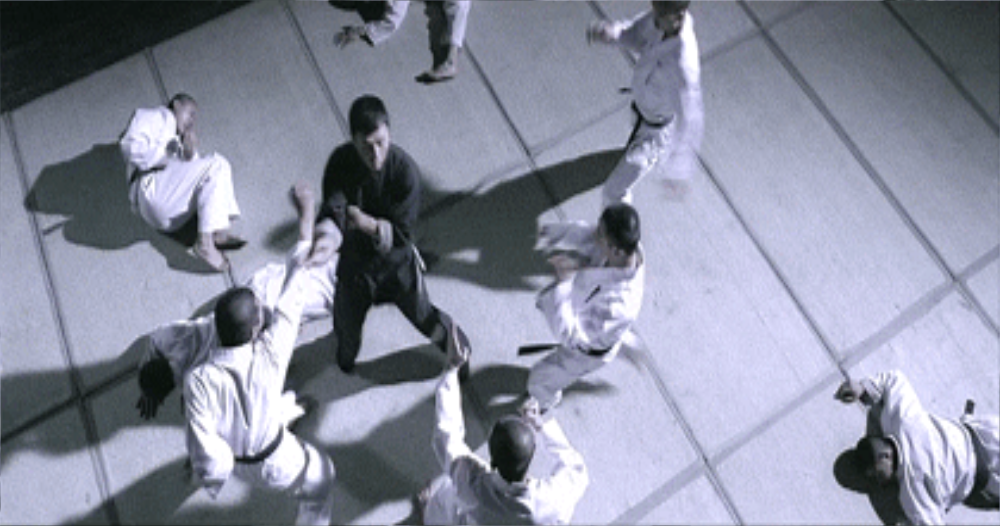
- Home
- IKC History
- Introduction to Karate
- Karate History
- Other Karate Styles
- Coaching
- Training
- What Will You Learn
- Fitness
- Diversity
- Coaching Children
- Coaching Children Cont'd
- Smart Ideas
- Competition Karate
- Kumite Etiquette
- Kumite Tactics Brief Guide
- Join a Club
- IKC Membership
- IKC Contacts
- Safegurding Contacts
- IKC Documents Policies
- Clothing Equipment
- Chief IKC Instructor Profile
- Senior IKC Instructor Profile
- Info & other sites
KARATE
Introduction to Karate
What Is Karate?
Our
S
t
y
le
of Karate
IKC is a multi style organisation, however, th
e
s
t
yle
o
f
Kar
at
e
the founder clubs p
r
ac
t
ic
e
a
t
I
KC is:
‘
W
A
D
O
-
RY
U
’
.
W
ad
o
-
Ry
u
Kar
at
e
w
as
fo
u
n
d
e
d
b
y:
S
e
n
sei
Hi
r
o
n
o
r
i O
h
t
su
ka (1892
-
1
982)
an
d
h
as
b
e
c
o
me
t
h
e
mo
st
p
o
p
u
lar
ly t
r
ain
e
d
st
yle
in
t
h
e
w
o
r
ld
.
WADO-RYU
W
a
=
p
e
ac
e
,
h
ar
mo
n
y.
D
o
= w
ay
,
me
t
h
o
d
.
Ry
u
= st
yle,
in
d
ic
at
e
s
a
so
ft
s
t
yl
e
.
Kar
at
e
is a
M
ar
t
ial A
r
t
s
sy
st
e
m
i
n
w
h
ic
h
a
ll
t
h
e
p
o
ssib
le
mo
v
e
me
n
t
s
o
f t
h
e
h
u
man
b
o
d
y
a
r
e
u
sed
.
T
h
is
make
s
Kar
at
e
a
n
id
e
al ex
e
r
c
is
e
fo
r
p
h
y
sic
al fit
n
e
ss
; it
c
o
u
ld
b
e
sa
id
t
h
at
Kar
at
e
is:
A
Ph
ys
ic
al E
xe
r
c
ise
A
Se
lf
D
e
fe
n
c
e
A
Sp
o
r
t
A
W
a
y
o
f Li
fe
It
is imp
o
r
t
an
t
t
h
at
p
r
o
gressio
n
in
K
a
r
at
e
is n
o
t
r
u
sh
e
d
b
u
t
d
e
v
e
lop
e
d
a
t
eac
h
s
t
age
.
T
ake t
im
e
t
o
le
ar
n
t
h
e
t
e
c
h
n
iq
u
e
s
an
d
mo
v
e
me
n
t
s
an
d
b
u
il
d
a
go
o
d
kn
o
w
le
d
ge
o
f Kar
at
e
-
Do.
There are many other styles of karate,
including both traditional and sport.
- Home
- IKC History
- Introduction to Karate
- Karate History
- Other Karate Styles
- Coaching
- Training
- What Will You Learn
- Fitness
- Diversity
- Coaching Children
- Coaching Children Cont'd
- Smart Ideas
- Competition Karate
- Kumite Etiquette
- Kumite Tactics Brief Guide
- Join a Club
- IKC Membership
- IKC Contacts
- Safegurding Contacts
- IKC Documents Policies
- Clothing Equipment
- Chief IKC Instructor Profile
- Senior IKC Instructor Profile
- Info & other sites
NSPCC
KARATE
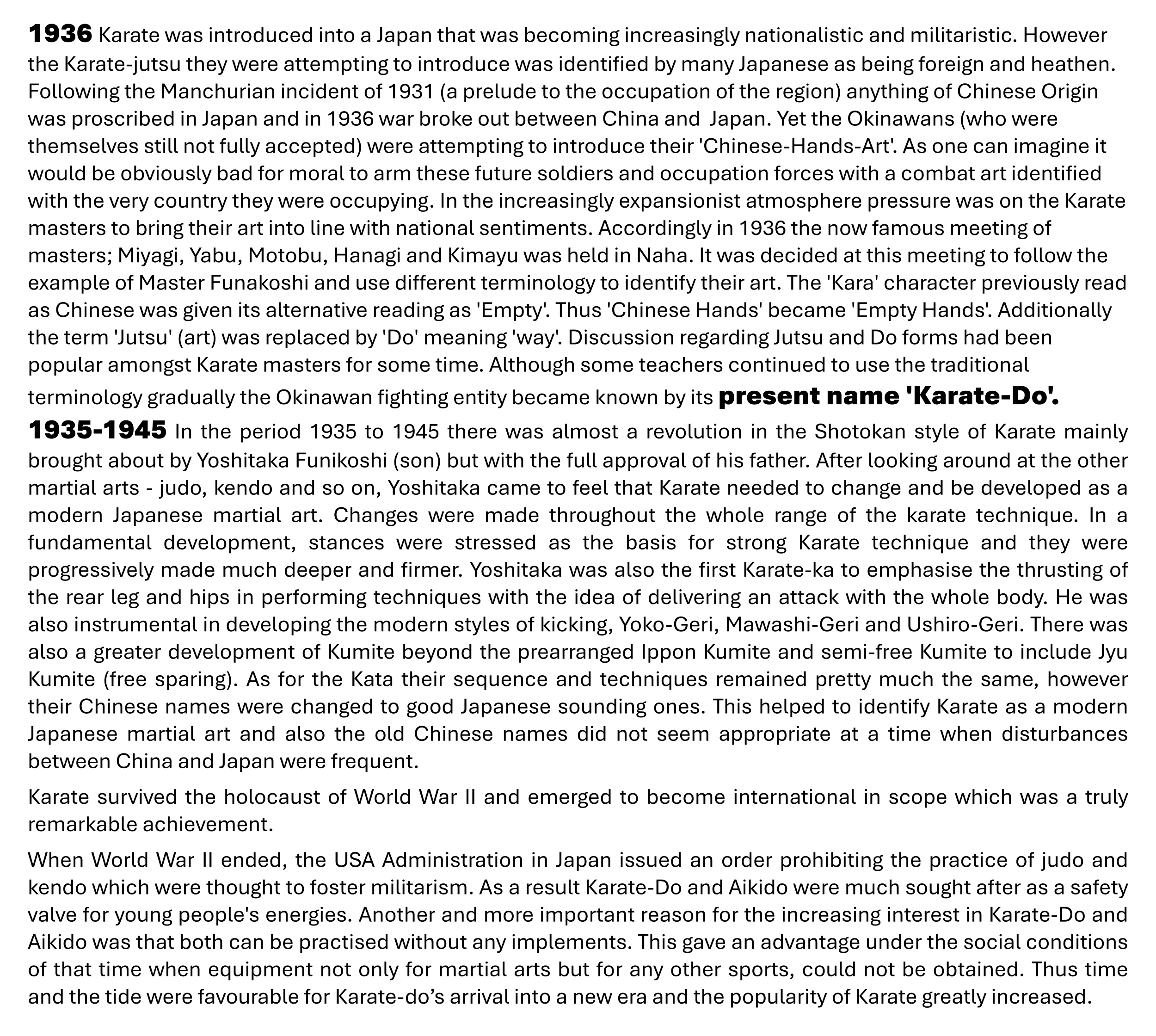
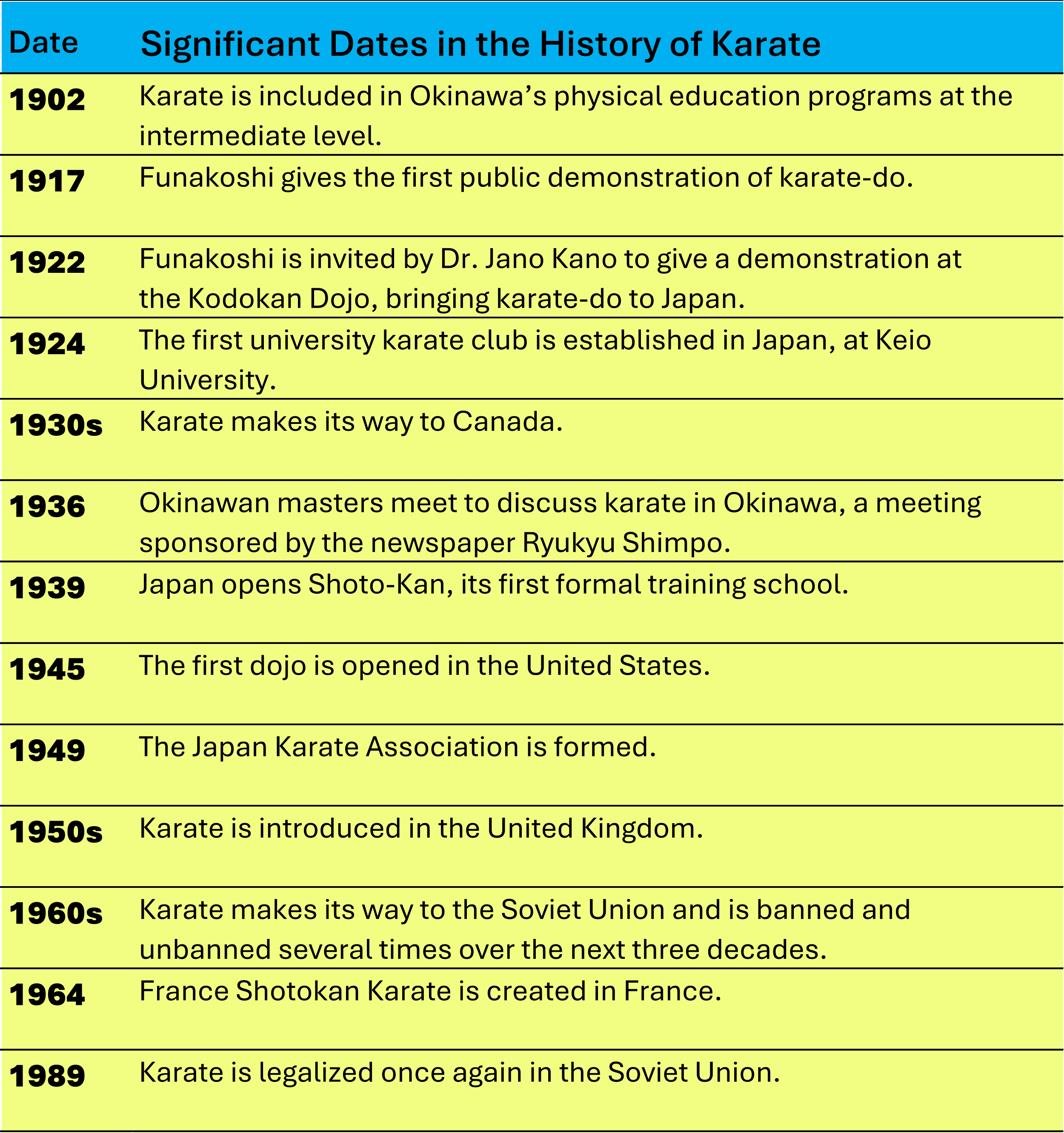
Brief History of Karate

Click on an image to enlarge
Click on an image to enlarge


- Home
- IKC History
- Introduction to Karate
- Karate History
- Other Karate Styles
- Coaching
- Training
- What Will You Learn
- Fitness
- Diversity
- Coaching Children
- Coaching Children Cont'd
- Smart Ideas
- Competition Karate
- Kumite Etiquette
- Kumite Tactics Brief Guide
- Join a Club
- IKC Membership
- IKC Contacts
- Safegurding Contacts
- IKC Documents Policies
- Clothing Equipment
- Chief IKC Instructor Profile
- Senior IKC Instructor Profile
- Info & other sites
KARATE
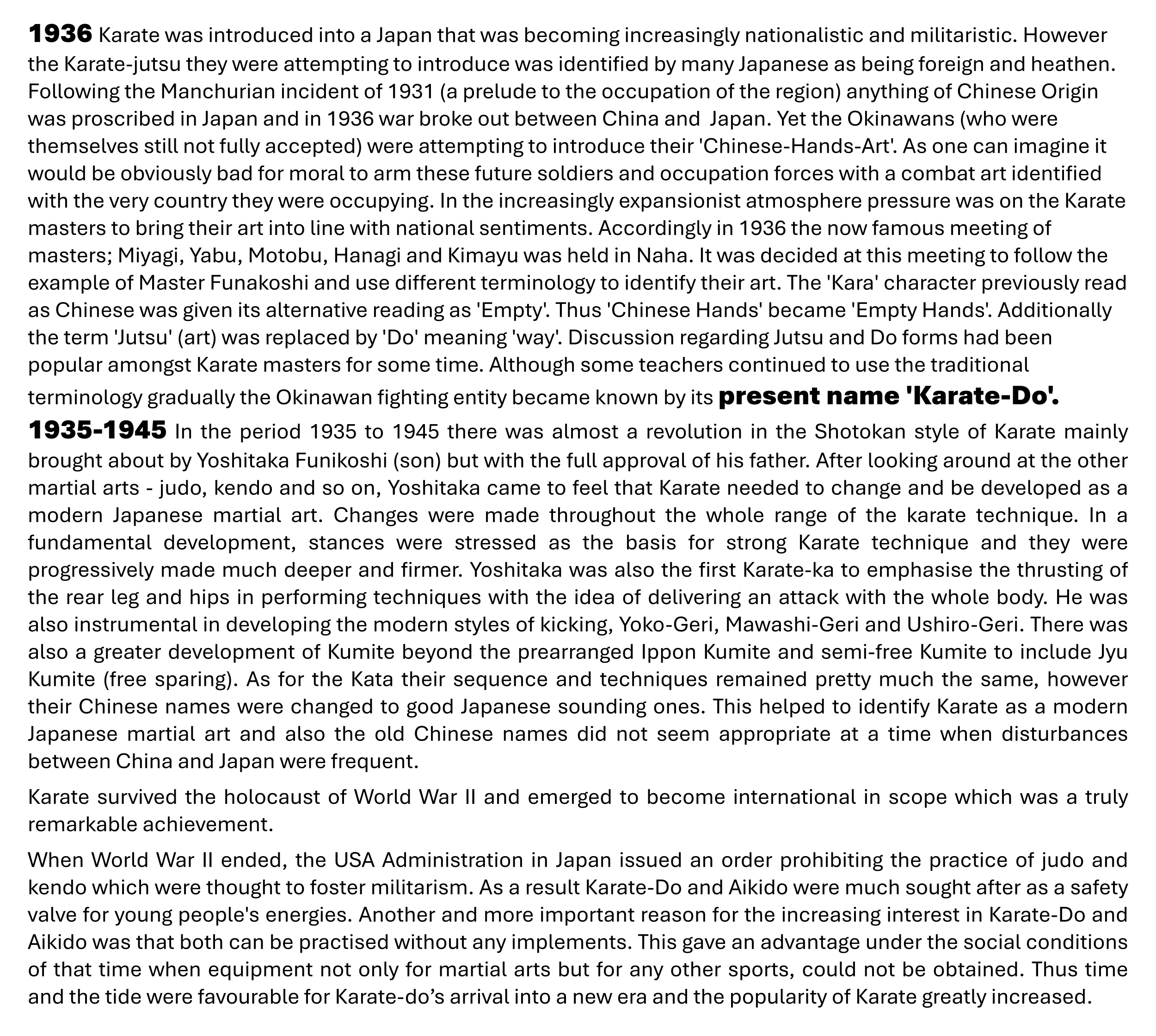
Brief History of Karate
Click on an image to enlarge

- Home
- IKC History
- Introduction to Karate
- Karate History
- Other Karate Styles
- Coaching
- Training
- What Will You Learn
- Fitness
- Diversity
- Coaching Children
- Coaching Children Cont'd
- Smart Ideas
- Competition Karate
- Kumite Etiquette
- Kumite Tactics Brief Guide
- Join a Club
- IKC Membership
- IKC Contacts
- Safegurding Contacts
- IKC Documents Policies
- Clothing Equipment
- Chief IKC Instructor Profile
- Senior IKC Instructor Profile
- Info & other sites
NSPCC
KARATE
Traditional & Sport
K
ar
ate
Style Comparison
(Get Comparison Chart)
Other Karate Styles
“There’s not much difference between traditional and
sport karate”. Basics, in any style of karate, is the same.
Whether it is Shotokan, Wado-Ryu, Kyokushinkai or any
style.
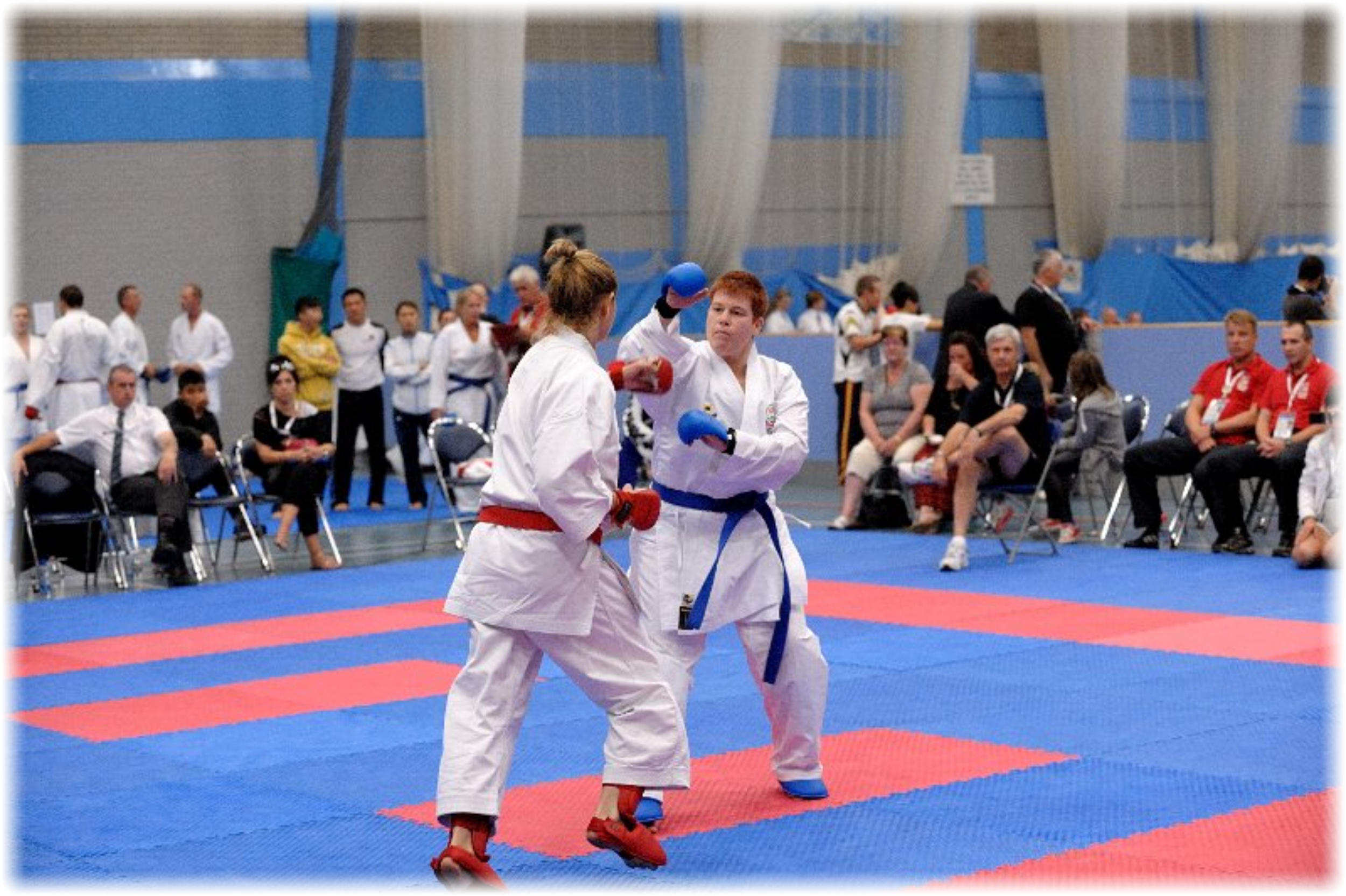
The difference starts in the ‘performance’ of the
techniques. Not just the body, but actually the mind
behind the performance.
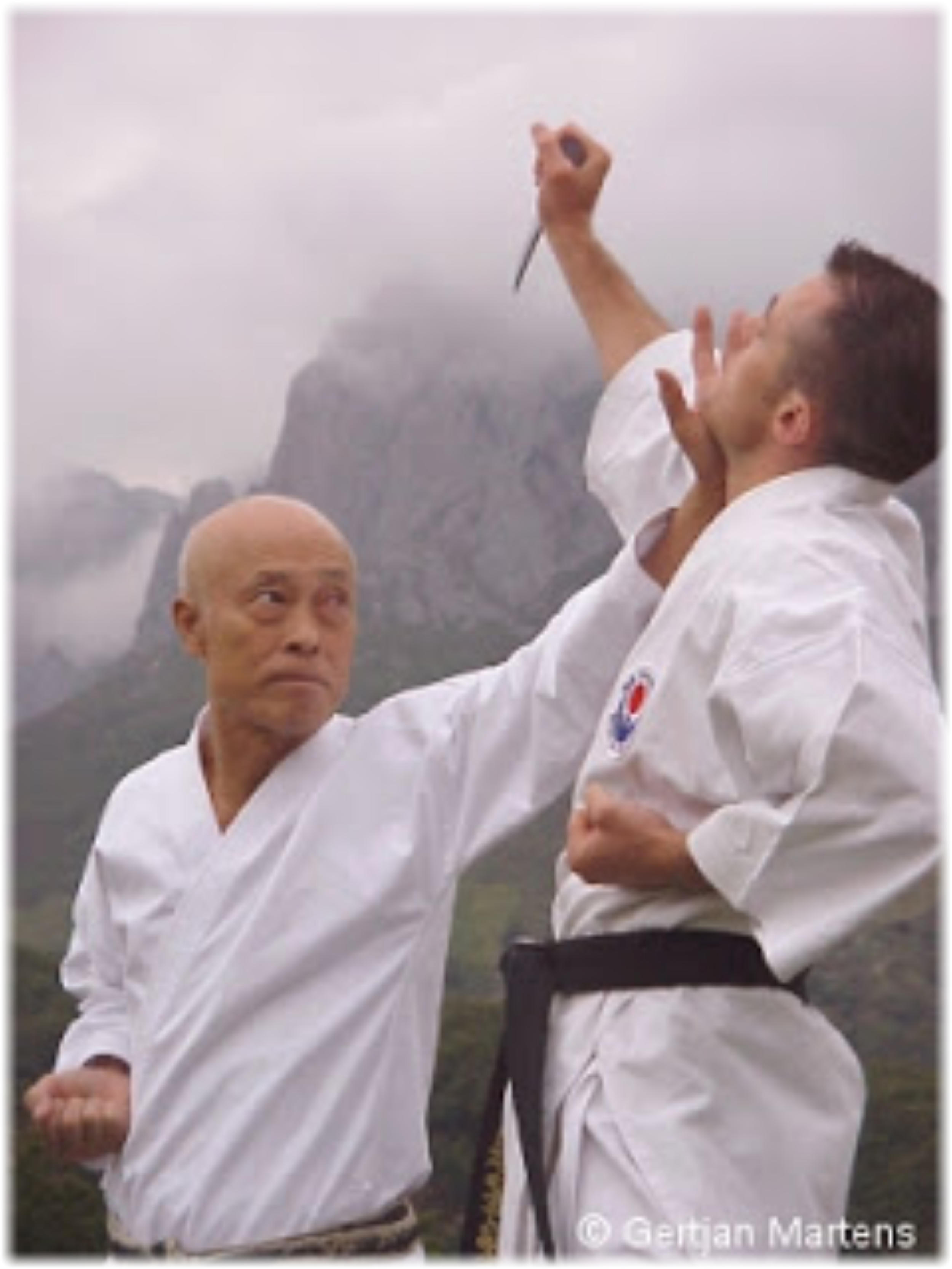
Traditional Karate:
is focused on self-defense, the killing blow or survival.
Every move in traditional karate has a meaning, it’s meant
for survival. The mind controls the moves, while the action
itself is purely self protection or self-defense.
Sports Karate:
is set on scoring a point against an opponent, with a well
placed, well timed technique in order to become a
champion or to get a trophy. Sport karate also has a set of
rules which determin what is needed to win.The traditional
idea of self defense is gone. The “winning” comes in the
first place. Reality and surviving has gone.
Each aspect of karate supports and enhances the other.
Traditional trains the mind and body to be technically
competent and strong, whilst Sports allows you to train for
speed and stamina as well as many other things.
The four earliest karate styles developed in Japan are
Shotokan, Wado-ryu, Shito-ryu, and Goju-ryu.
The first three styles find their origins in the Shorin-Ryu
style from Shuri, Okinawa, while Goju-ryu finds its origins
in Naha.
Shuri karate is rather different from Naha karate, drawing
on different predecessor influences. Shito-ryu can be
regarded as a blend of Shuri and Naha traditions as its
kata incorporate both Shuri and Naha kata. When it
comes to individual karate styles:
Shotokan involves long, deep stances and powerful long
range techniques.
Shito-Ryu, on the other hand, uses more upright stances
and stresses speed rather than power in its long and
middle range techniques.
Wado-Ryu too employs shorter, more natural stances
and the style is characterised by the emphasis on body
shifting to avoid attacks.
Kyokushin, a hard style, involves breaking more often
than the other styles and full contact, knockdown
sparring as a main part of its training.
Goju-Ryu places emphasis on Sanchin kata and its
rooted Sanchin stance, and it features grappling and
close-range techniques
Click on images to enlarge
- Home
- IKC History
- Introduction to Karate
- Karate History
- Other Karate Styles
- Coaching
- Training
- What Will You Learn
- Fitness
- Diversity
- Coaching Children
- Coaching Children Cont'd
- Smart Ideas
- Competition Karate
- Kumite Etiquette
- Kumite Tactics Brief Guide
- Join a Club
- IKC Membership
- IKC Contacts
- Safegurding Contacts
- IKC Documents Policies
- Clothing Equipment
- Chief IKC Instructor Profile
- Senior IKC Instructor Profile
- Info & other sites
KARATE
Traditional & Sport
K
ar
ate
Other Karate Styles
“There’s not much difference between traditional and sport
karate”. Basics, in any style of karate, is the same. Whether it is
Shotokan, Wado-Ryu, Kyokushinkai or any style.
Traditional Karate:
is focused on self-defense, the killing blow or survival. Every
move in traditional karate has a meaning, it’s meant for
survival. The mind controls the moves, while the action itself is
purely self protection or self-defense.
Sports Karate:
is set on scoring a point against an opponent, with a well
placed, well timed technique in order to become a champion
or to get a trophy. Sport karate also has a set of rules which
determin what is needed to win.The traditional idea of self
defense is gone. The “winning” comes in the first place. Reality
and surviving has gone.
Each aspect of karate supports and enhances the other.
Traditional trains the mind and body to be technically
competent and strong, whilst Sports allows you to train for
speed and stamina as well as many other things.
The four earliest karate styles developed in Japan are
Shotokan, Wado-ryu, Shito-ryu, and Goju-ryu.
The first three styles find their origins in the Shorin-Ryu style
from Shuri, Okinawa, while Goju-ryu finds its origins in Naha.
Shotokan Shito-Ryu Wado-Ryu Kyokushin Goju-Ryu

Click on
images to
enlarge

- Home
- IKC History
- Introduction to Karate
- Karate History
- Other Karate Styles
- Coaching
- Training
- What Will You Learn
- Fitness
- Diversity
- Coaching Children
- Coaching Children Cont'd
- Smart Ideas
- Competition Karate
- Kumite Etiquette
- Kumite Tactics Brief Guide
- Join a Club
- IKC Membership
- IKC Contacts
- Safegurding Contacts
- IKC Documents Policies
- Clothing Equipment
- Chief IKC Instructor Profile
- Senior IKC Instructor Profile
- Info & other sites
NSPCC
KARATE
Coaches Responsibilities
Qualifications and Standards
Coaching
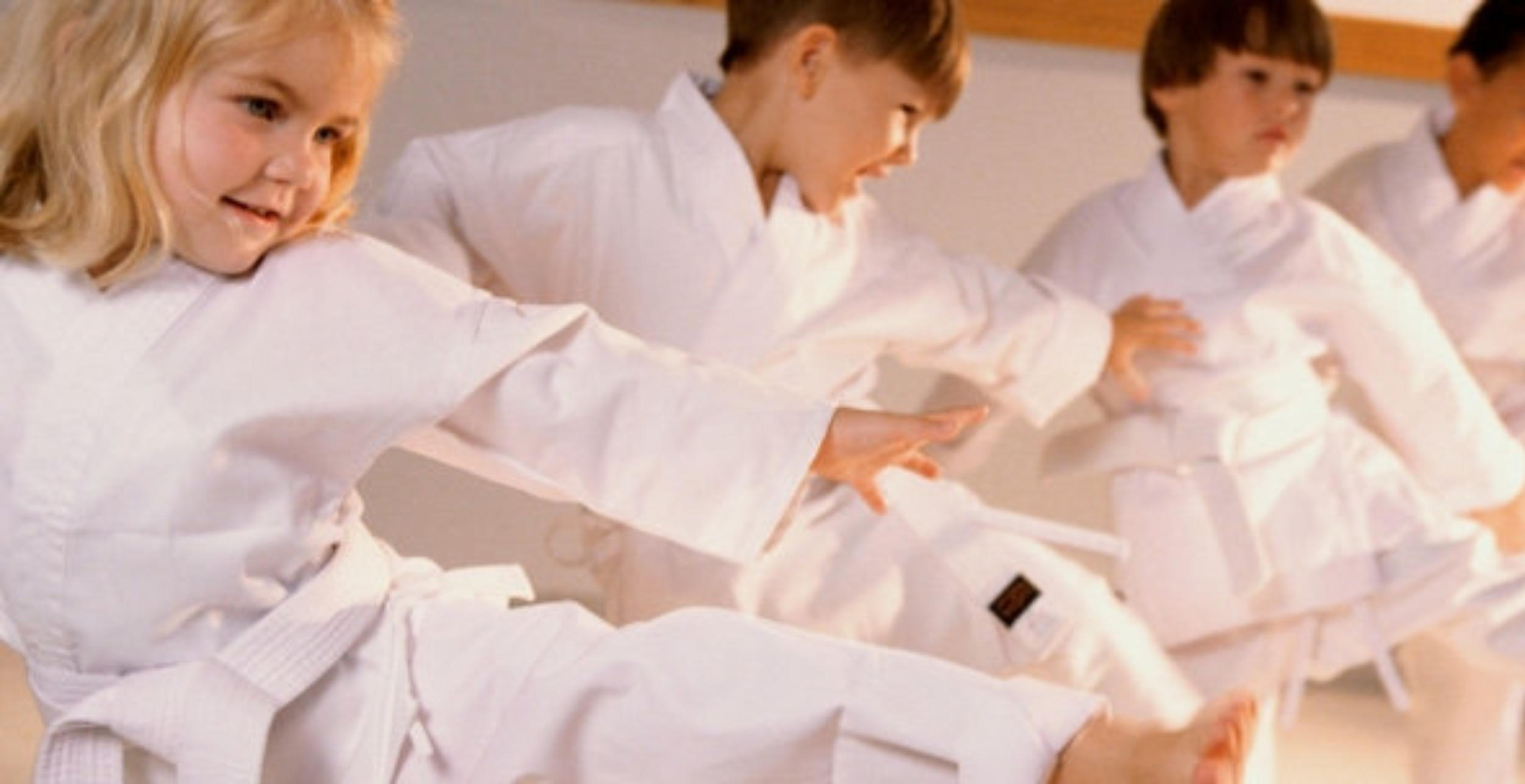
IKC coaches ensure that every participant that attends our
sessions, irrespective of their level, receives the same
levels of respect, support and common courtesy.
The role of the coach is also about creating a trusting
relationship where athletes feel able to share relevant
and personal information.
A coach must support athletes to be the best by
considering their physical, social, cultural and emotional
needs.
We know that coaching encourages people to start in
sport and physical activity such as karate, improves
enjoyment, maintains engagement, improves fitness,
develops skills and builds lifelong connections to sport
and activity.
This means that our coaches and instructors play a
critical role in the development of karate and other
activities and in the lives of the people they coach. Our
coaches strive to ensure participants have positive
experiences, so they are more likely to continue and
achieve their potential.
Our club instructors have the following:
A black belt grade in the style of karate being taught
A recognised sports coach qualification
£1 million Professional Indemnity Insurance
DBS (was CRB) enhanced disclosure
Basic First Aid
Safeguarding training
Health & Safety
Coaching Children & Adults
Lesson Planning
Club Management
Instructors will have been trained in the following:
Click on image to enlarge




- Home
- IKC History
- Introduction to Karate
- Karate History
- Other Karate Styles
- Coaching
- Training
- What Will You Learn
- Fitness
- Diversity
- Coaching Children
- Coaching Children Cont'd
- Smart Ideas
- Competition Karate
- Kumite Etiquette
- Kumite Tactics Brief Guide
- Join a Club
- IKC Membership
- IKC Contacts
- Safegurding Contacts
- IKC Documents Policies
- Clothing Equipment
- Chief IKC Instructor Profile
- Senior IKC Instructor Profile
- Info & other sites
KARATE
Coaches Responsibilities
Qualifications and Standards
Coaching
IKC coaches ensure that every
participant that attends our
sessions, irrespective of their
level, receives the same
levels of respect, support and
common courtesy.
A coach must support
athletes to be the best by
considering their physical,
social, cultural and
emotional needs.
We know that coaching encourages people to start in
sport and physical activity such as karate, improves
enjoyment, maintains engagement, improves fitness,
develops skills and builds lifelong connections to sport
and activity.
Our club instructors have the following:
A black belt grade in the style of karate being taught
A recognised sports coach qualification
£1 million Professional Indemnity Insurance
DBS (was CRB) enhanced disclosure
Basic First Aid
Safeguarding training
Health & Safety
Coaching Children & Adults
Lesson Planning
Club Management
Instructors will have been trained in the following:
Click on
image to
enlarge

- Home
- IKC History
- Introduction to Karate
- Karate History
- Other Karate Styles
- Coaching
- Training
- What Will You Learn
- Fitness
- Diversity
- Coaching Children
- Coaching Children Cont'd
- Smart Ideas
- Competition Karate
- Kumite Etiquette
- Kumite Tactics Brief Guide
- Join a Club
- IKC Membership
- IKC Contacts
- Safegurding Contacts
- IKC Documents Policies
- Clothing Equipment
- Chief IKC Instructor Profile
- Senior IKC Instructor Profile
- Info & other sites
NSPCC
KARATE
Click on image to enlarge
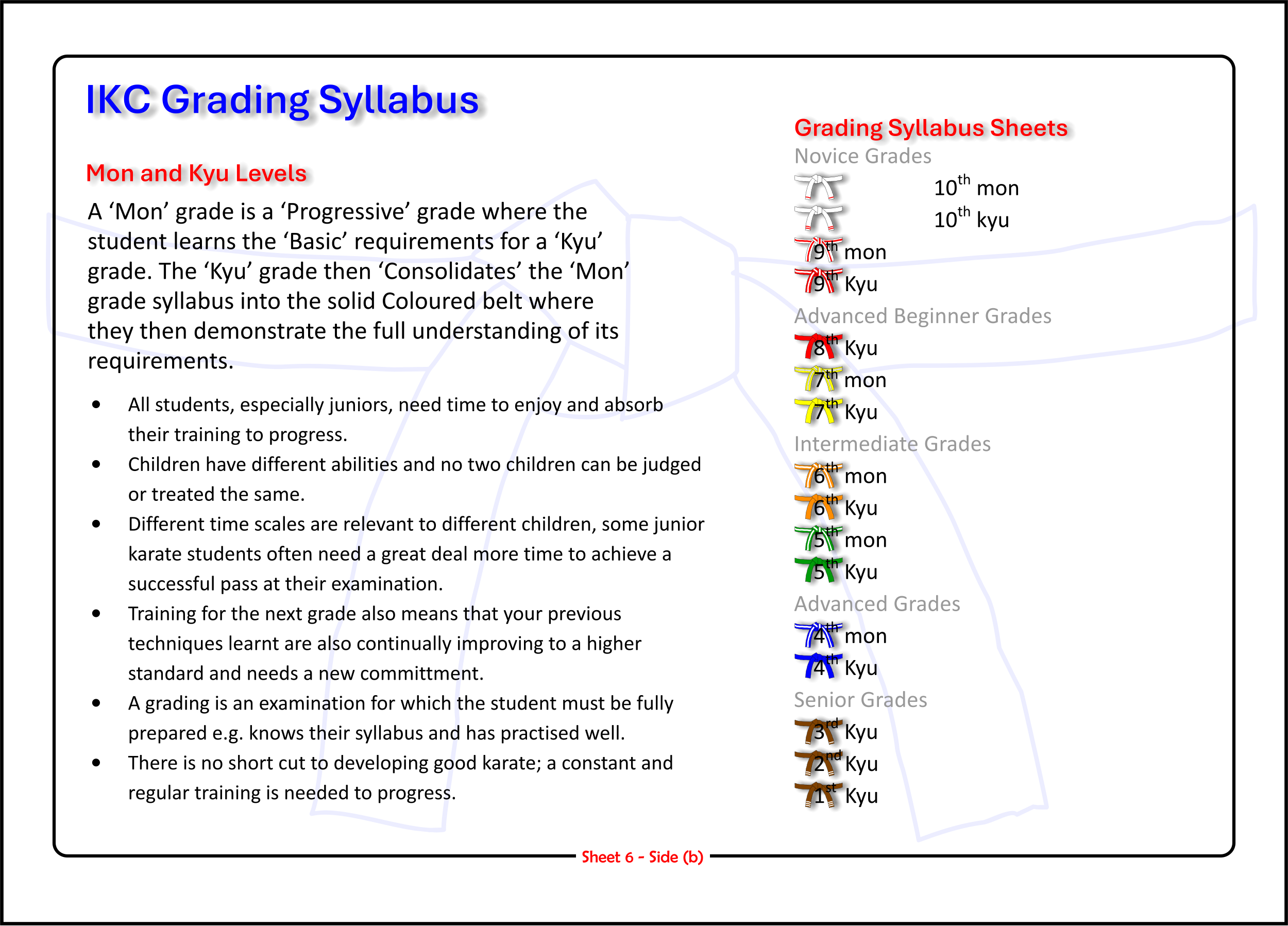


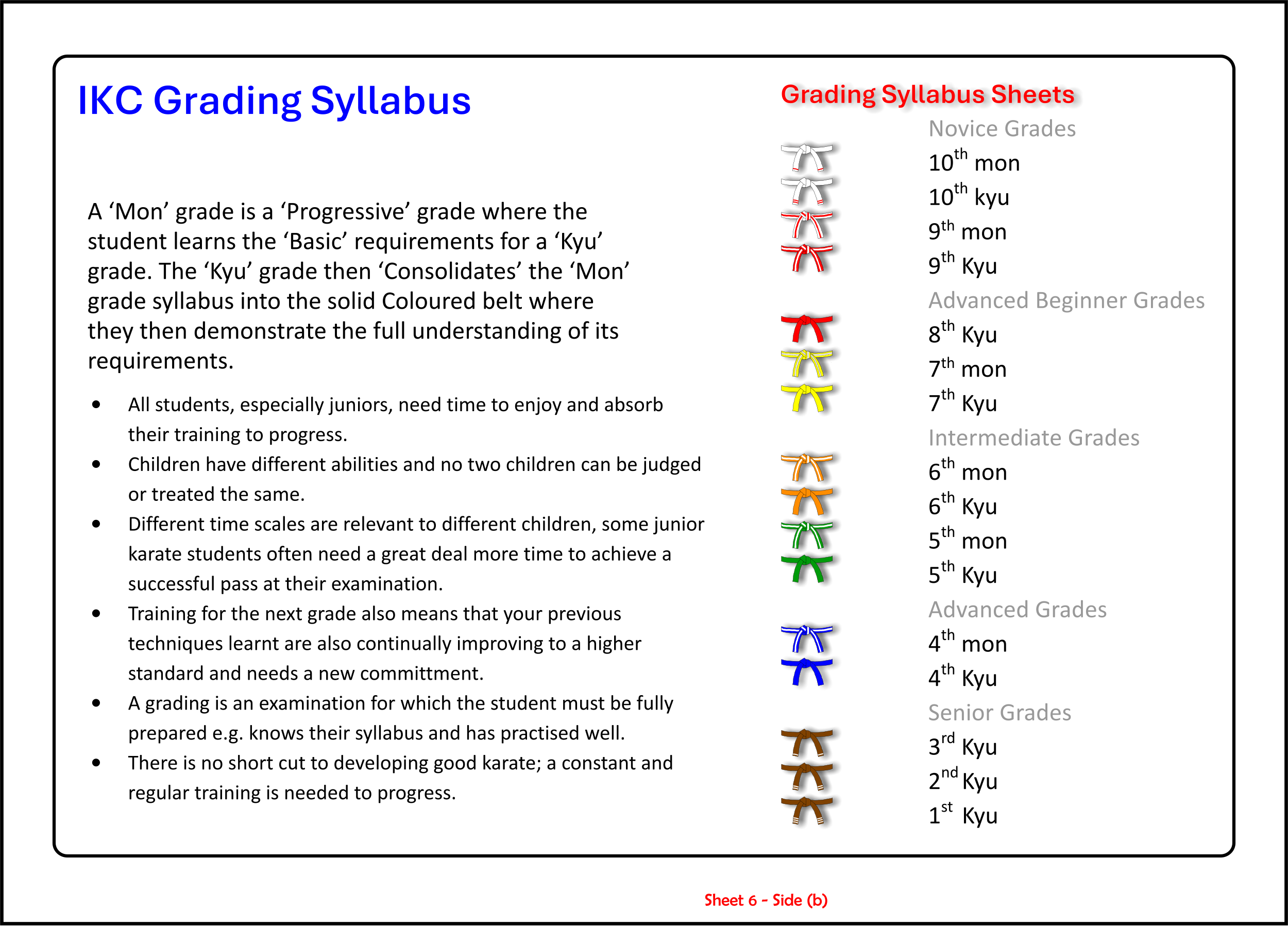
The MON and KYU grades
Before the Black Belt grades, their are several MON and KYU GRADES. They are represented
with coloured belts.
This system allows the student to develop over time and helps to identify their grade. You will
see many variations of this system with different styles of karate and different organisations
using different numbers of ‘Mon’ and ‘Kyu’ grade levels and many different combinations of
couloured belts.
The techniques and information the student needs to learn
and understand to be able to progress, is in the ‘Syllabus’.
The syllabus is available from the instructor.

Anyone can practise Karate.
People train for many different reasons, however,
the benefits will include the following:
Fostering self discipline
Boost socialisation skills
Encouraging Physical Activity
Learning to Set and Achieve Goals
Increased Self Esteem
Instilling a Sense of Respect
Improving Listening Skills
Developing Team Skills
Improvement in other areas of life
SELF DEFENCE
Karate students will be taught the ‘Basics’ of Karate
during their lessons.
And at the start of each lesson, the students will be
told ‘what’ they will be expected to learn and
understand by the end of each lesson.
To ensure learning and understanding takes place,
our lessons follow the ‘SMART IDEAS’ format as
described earlier.
If you don’t already train, why not go down to your
local club and try out a few lessons?
The Syllabus
Training
- Home
- IKC History
- Introduction to Karate
- Karate History
- Other Karate Styles
- Coaching
- Training
- What Will You Learn
- Fitness
- Diversity
- Coaching Children
- Coaching Children Cont'd
- Smart Ideas
- Competition Karate
- Kumite Etiquette
- Kumite Tactics Brief Guide
- Join a Club
- IKC Membership
- IKC Contacts
- Safegurding Contacts
- IKC Documents Policies
- Clothing Equipment
- Chief IKC Instructor Profile
- Senior IKC Instructor Profile
- Info & other sites
KARATE
Click on image to enlarge


The techniques and
information the
student needs to
learn and
understand to be
able to progress, is
in the ‘Syllabus’. The
syllabus is available
from the instructor.
Anyone can practise Karate.
People train for many different reasons, however,
the benefits will include the following:
Fostering self discipline
Boost socialisation skills
Encouraging Physical Activity
Learning to Set and Achieve Goals
Increased Self Esteem
Instilling a Sense of Respect
Improving Listening Skills
Developing Team Skills
Improvement in other areas of life
SELF DEFENCE
Karate students will be taught the ‘Basics’ of Karate
during their lessons.
The Syllabus
Training
- Home
- IKC History
- Introduction to Karate
- Karate History
- Other Karate Styles
- Coaching
- Training
- What Will You Learn
- Fitness
- Diversity
- Coaching Children
- Coaching Children Cont'd
- Smart Ideas
- Competition Karate
- Kumite Etiquette
- Kumite Tactics Brief Guide
- Join a Club
- IKC Membership
- IKC Contacts
- Safegurding Contacts
- IKC Documents Policies
- Clothing Equipment
- Chief IKC Instructor Profile
- Senior IKC Instructor Profile
- Info & other sites
NSPCC
KARATE
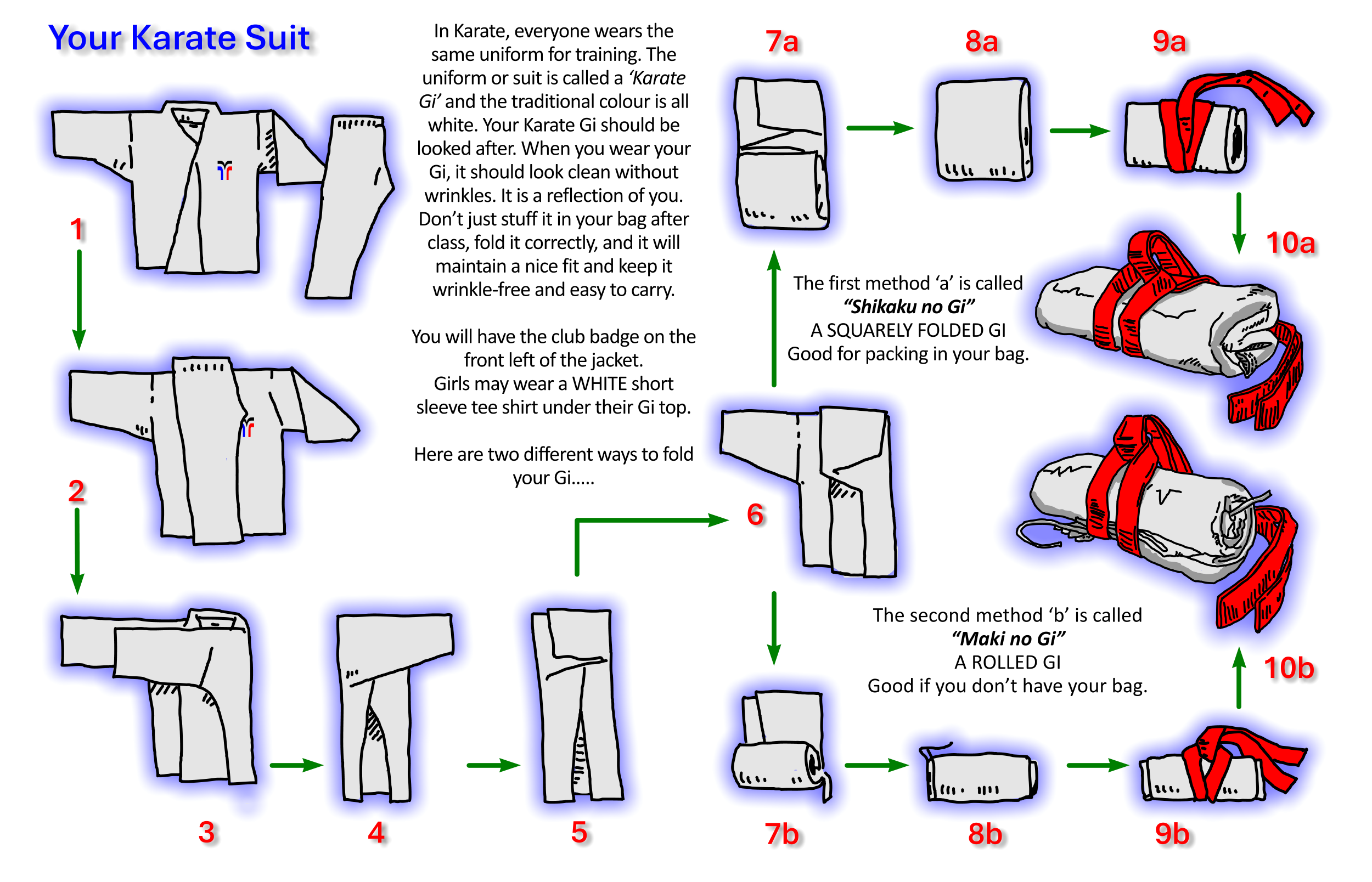
Looking after your Karate Suit (Gi)
What will you learn?
Would you leave your sweat soaked tee shirt in your
training bag after training ready for next time? Probably
not.
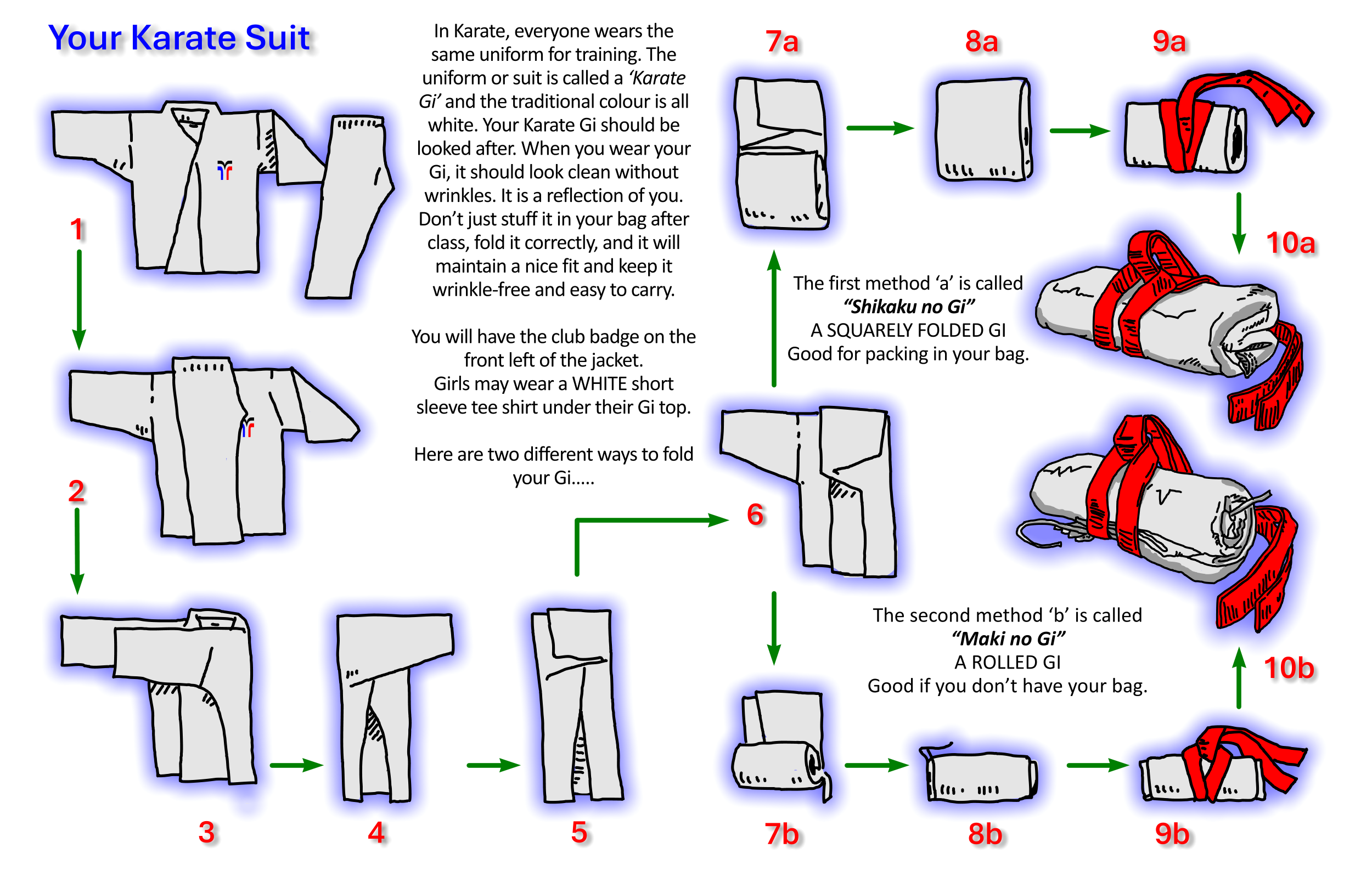
Looking after the Gi (Karate suit) is a special part of Karate
training as it shows that you have respect for and care
yourself.
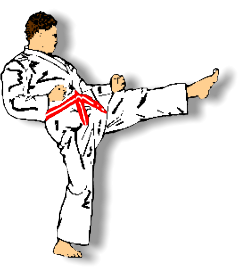
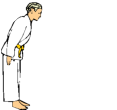
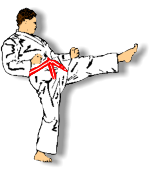
Punching, Striking, Blocking, Kicking, Throwing,
Sweeping, Stances and fighting are just some of the
things to be learnt. BUT, is learning enough?
During lessons, students are regularly monitored and
assessed to ensure that its not just LEARNING which is
taking place, but also, and more importantly,
UNDERSTANDING. This is especially important with
young children. Ultimately, GRADINGS (like a practical
exam) are taken by the student where they will perform
what they have needed to learn and understand for the
GRADE they are working towards.
As the student progresses through the grades, what they
need to be able to do and know, becomes more technical
and challenging.
As well as techniques and drills, students will learn
about some of the traditions which have been adopted by
western Karate practitioners.
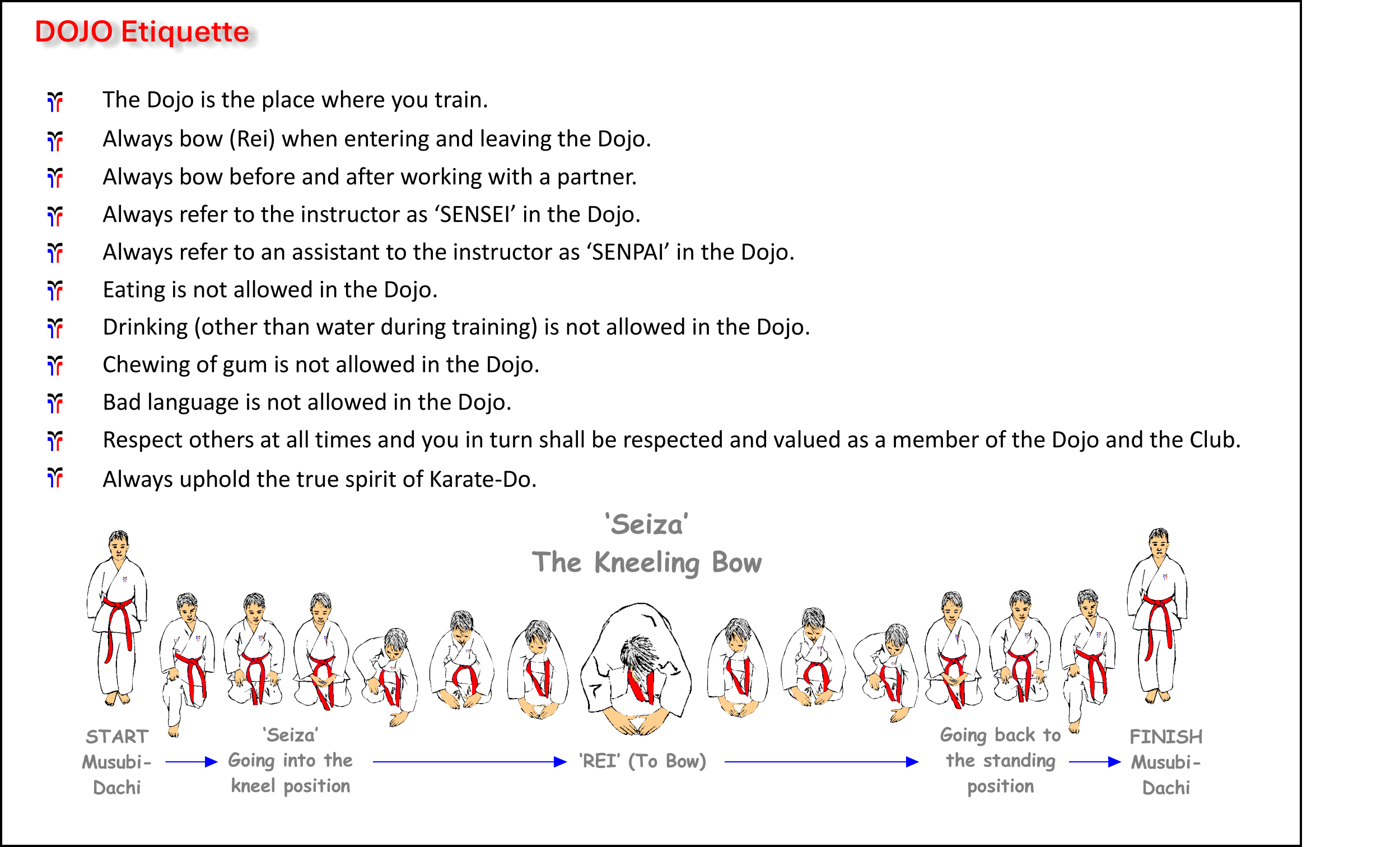
There are of course many simple things to learn; you
should know the name of the style of the Karate being
practised, the name of the suit being worn during training
and other important but simple things.
Blocking

Kicking
Punching
Click on image to enlarge
Click on image to enlarge


- Home
- IKC History
- Introduction to Karate
- Karate History
- Other Karate Styles
- Coaching
- Training
- What Will You Learn
- Fitness
- Diversity
- Coaching Children
- Coaching Children Cont'd
- Smart Ideas
- Competition Karate
- Kumite Etiquette
- Kumite Tactics Brief Guide
- Join a Club
- IKC Membership
- IKC Contacts
- Safegurding Contacts
- IKC Documents Policies
- Clothing Equipment
- Chief IKC Instructor Profile
- Senior IKC Instructor Profile
- Info & other sites
KARATE
What will you learn?
Punching, Striking, Blocking, Kicking, Throwing,
Sweeping, Stances and fighting are just some of the
things to be learnt. BUT, is learning enough?
As well as techniques and drills, students will learn
about some of the traditions which have been adopted by
western Karate practitioners.
Blocking

Kicking
Punching
Click on image to enlarge
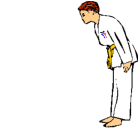
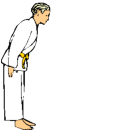

Students are regularly monitored and
assessed to ensure that its not just
LEARNING which is taking place, but
also, and more importantly,
UNDERSTANDING.
This is especially important with
young children. Ultimately,
GRADINGS (like a practical exam) are
taken by the student where they will
perform what they have needed to
learn and understand for the GRADE
they are working towards.
- Home
- IKC History
- Introduction to Karate
- Karate History
- Other Karate Styles
- Coaching
- Training
- What Will You Learn
- Fitness
- Diversity
- Coaching Children
- Coaching Children Cont'd
- Smart Ideas
- Competition Karate
- Kumite Etiquette
- Kumite Tactics Brief Guide
- Join a Club
- IKC Membership
- IKC Contacts
- Safegurding Contacts
- IKC Documents Policies
- Clothing Equipment
- Chief IKC Instructor Profile
- Senior IKC Instructor Profile
- Info & other sites
NSPCC
KARATE
Flexibility
Fitness
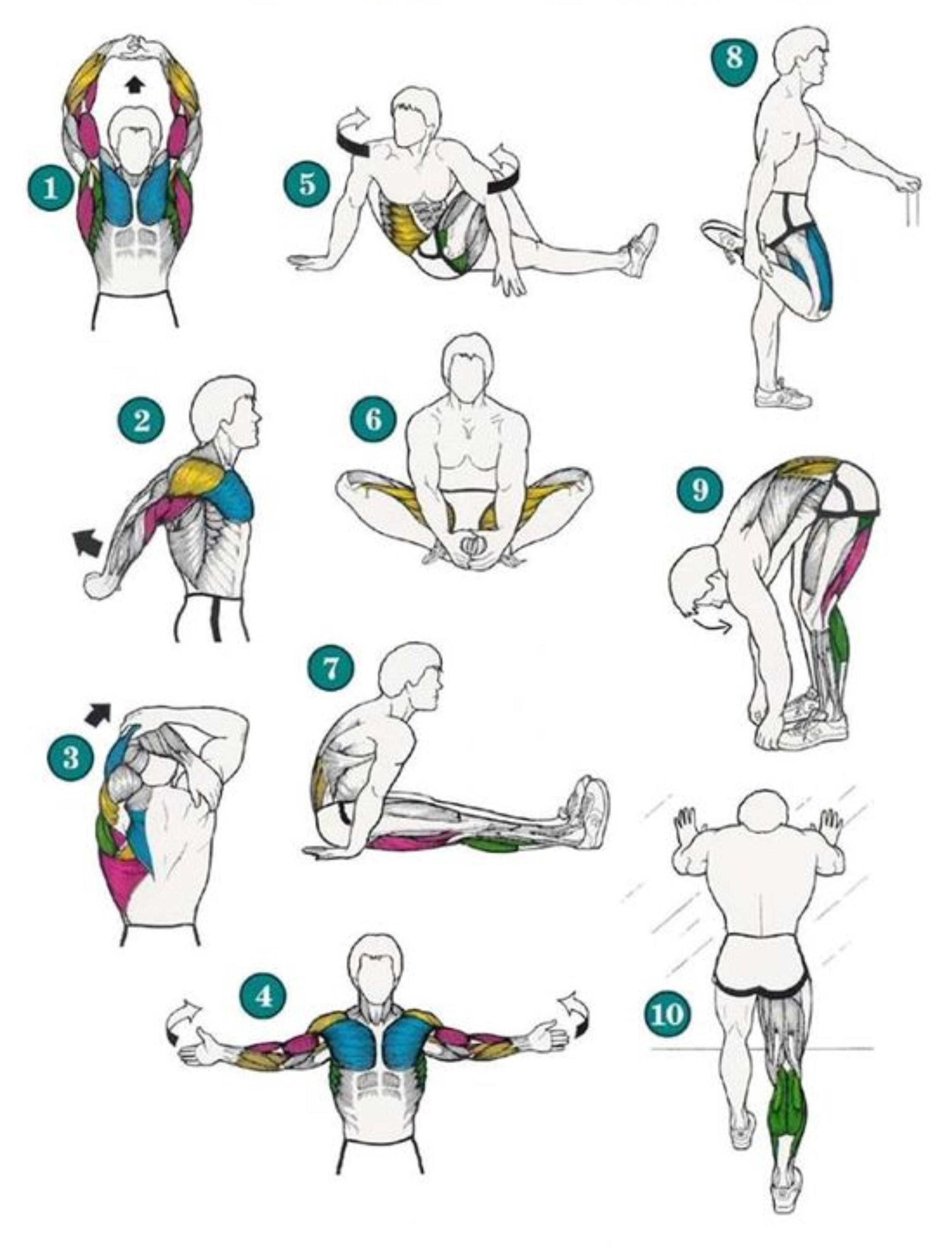
Flexibility training or stretching will be an integral part of
every session during ‘warming up’ &‘cooling down’.
It’s a myth that you need to ’do the splits’ like Bruce Lee or
Jean-Claud Van Damme to be able to do Karate.
There are several benefits of flexibility training.
It increases range of motion. Flexibility training helps
improve the range of motion of your joints and muscles.
Next, it decreases your risk of injury. When your
muscles are flexible, you are less likely to become
injured during physical activity. It also reduces muscle
soreness.
Flexibility training can help reduce muscle soreness
after training. Stretching after you exercise keeps your
muscles loose and relaxed.
Lastly, it improves athletic performance. When your
joints and muscles are flexible, you use less energy
while in motion, which improves your overall
performance.
Done correctly and regularly over time, your flexibility
increases providing all the benefits of better performance
and technique.
So you want to do Karate!
But how FIT do you need to be?
The simple answer is that as long as there are no medical
reasons preventing you from training and doing exercise,
your level of fitness should not be a barrier to starting
training.
Each individual who attends the class will be assessed
by the instructor who will ask questions to get an idea of
their fitness level. A short questionaire will indicate if
there are any conditions such as asthma that needs to be
monitored and if there are any concerns the advice is
always ‘ask your G.P. first before starting any exercise.
The needs of everyone across all age groups are diverse.
Practising Karate in the club environment will provide
opportunities for individuals to start to improve their
fitness levels.
Beginners to Karate will be encouraged to push
themselves initially at their own pace. As the student
progresses through their grades, a certain level of fitness
will be expected; obviously taking into account any
disabilities or personal medical conditions.
Below are examples of the types of training students are
encouraged to strive to do to complement their Karate
training: (The following is not exhaustive)
Weight Training for the whole body
Cardiovascular exercises to improve endurance
Core Training - Core Strength
Core Training - Core Stability
Plyometrics (Jump Training)
Flexibility
Click on image to enlarge
- Home
- IKC History
- Introduction to Karate
- Karate History
- Other Karate Styles
- Coaching
- Training
- What Will You Learn
- Fitness
- Diversity
- Coaching Children
- Coaching Children Cont'd
- Smart Ideas
- Competition Karate
- Kumite Etiquette
- Kumite Tactics Brief Guide
- Join a Club
- IKC Membership
- IKC Contacts
- Safegurding Contacts
- IKC Documents Policies
- Clothing Equipment
- Chief IKC Instructor Profile
- Senior IKC Instructor Profile
- Info & other sites
KARATE
Flexibility
Fitness
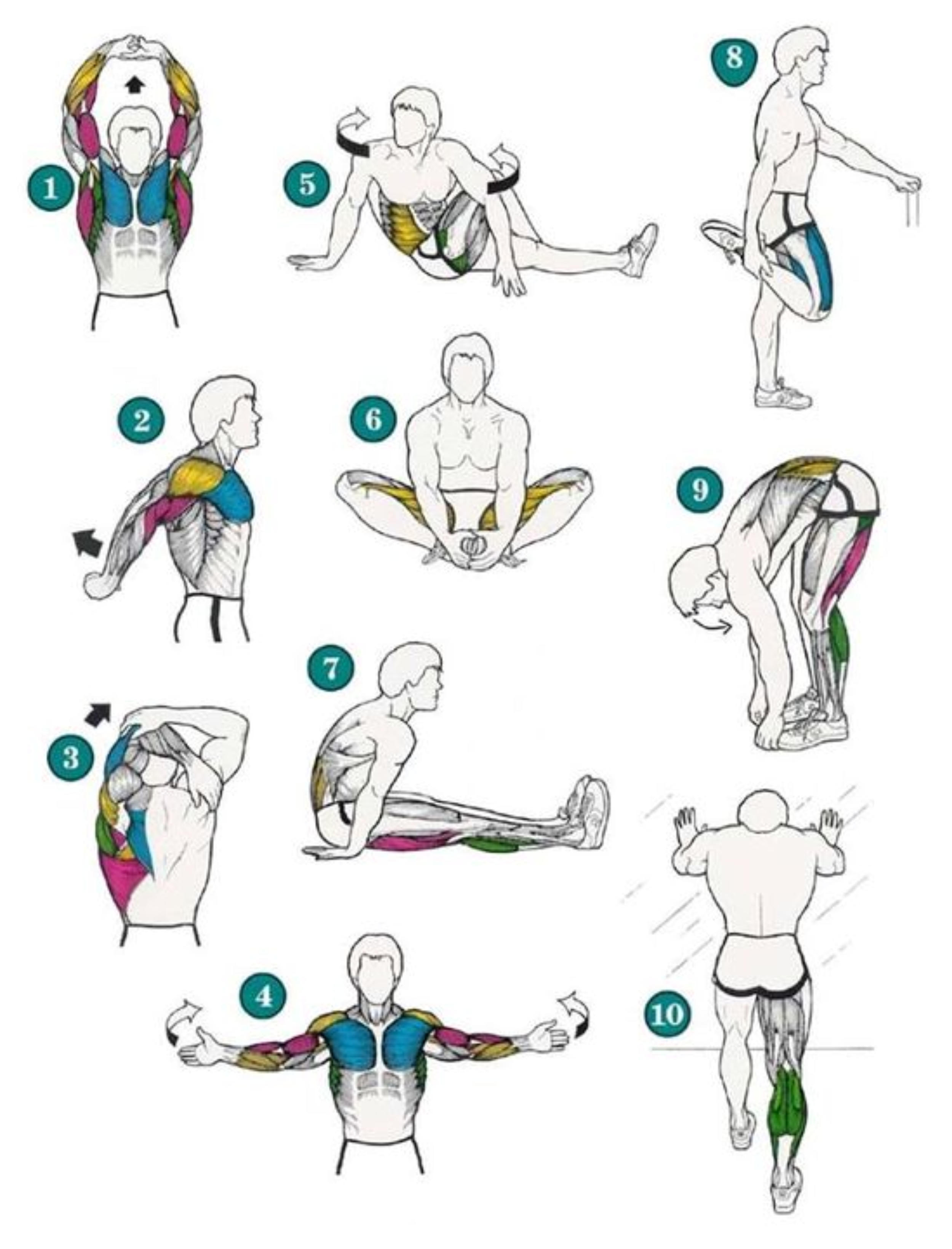
Flexibility training or stretching will be an
integral part of every session during
‘warming up’ &‘cooling down’.
It’s a myth that you need to ’do the splits’
like Bruce Lee or Jean-Claud Van Damme
to be able to do Karate.
It increases range of motion.
Next, it decreases your risk of injury.
Flexibility training can help reduce
muscle soreness after training.
Lastly, it improves athletic
performance.
So you want to do Karate!
But how FIT do you need to be?
The simple answer is that as long as there are no medical
reasons preventing you from training and doing exercise,
your level of fitness should not be a barrier to starting
training.
Each individual who attends the class will be assessed by
the instructor who will ask questions to get an idea of their
fitness level. A short questionaire will indicate if there are
any conditions such as asthma that needs to be monitored
and if there are any concerns the advice is always ‘ask your
G.P. first before starting any exercise.
Click on image to enlarge
- Home
- IKC History
- Introduction to Karate
- Karate History
- Other Karate Styles
- Coaching
- Training
- What Will You Learn
- Fitness
- Diversity
- Coaching Children
- Coaching Children Cont'd
- Smart Ideas
- Competition Karate
- Kumite Etiquette
- Kumite Tactics Brief Guide
- Join a Club
- IKC Membership
- IKC Contacts
- Safegurding Contacts
- IKC Documents Policies
- Clothing Equipment
- Chief IKC Instructor Profile
- Senior IKC Instructor Profile
- Info & other sites
NSPCC
KARATE
Child Development
Diversity & Inclusion
Through participation in sport and physical education, young
people learn about the importance of key values such as:
Honesty, Teamwork, Fair play, Respect for themselves and
others, Adherence to rules
They will learn how to deal with competition and how to
cope with both winning and losing.
In terms of physical and health aspects of child and youth
development, there is an overwhelming amount of evidence
that focuses on the (mostly positive) effects of sport and
exercise on physical health, growth and development.
We also focus on the development of the individual and not
only on the development of technical Karate skills.
While the physical benefits of participation in sport are well
known and supported by large volumes of empirical
evidence, sport and physical activity can also have positive
benefits on education.
Sport-based programmes have been shown to improve the
learning performance of children and young people,
encouraging school attendance and a desire to succeed
academically. It has also been shown that children who train
regularly gain higher grades at school.
Karate training will contribute to
the holistic development of
young people. Children take part
in fun and creative Karate
activities.
Contact a Family (www.cafamily.org.uk/professionals/research/statistics.html)
Statistically speaking; There are 6.9 million disabled
people of working age in the UK representing around 19%
of the total working population. In addition, there are
770,000 disabled children under the age of 16
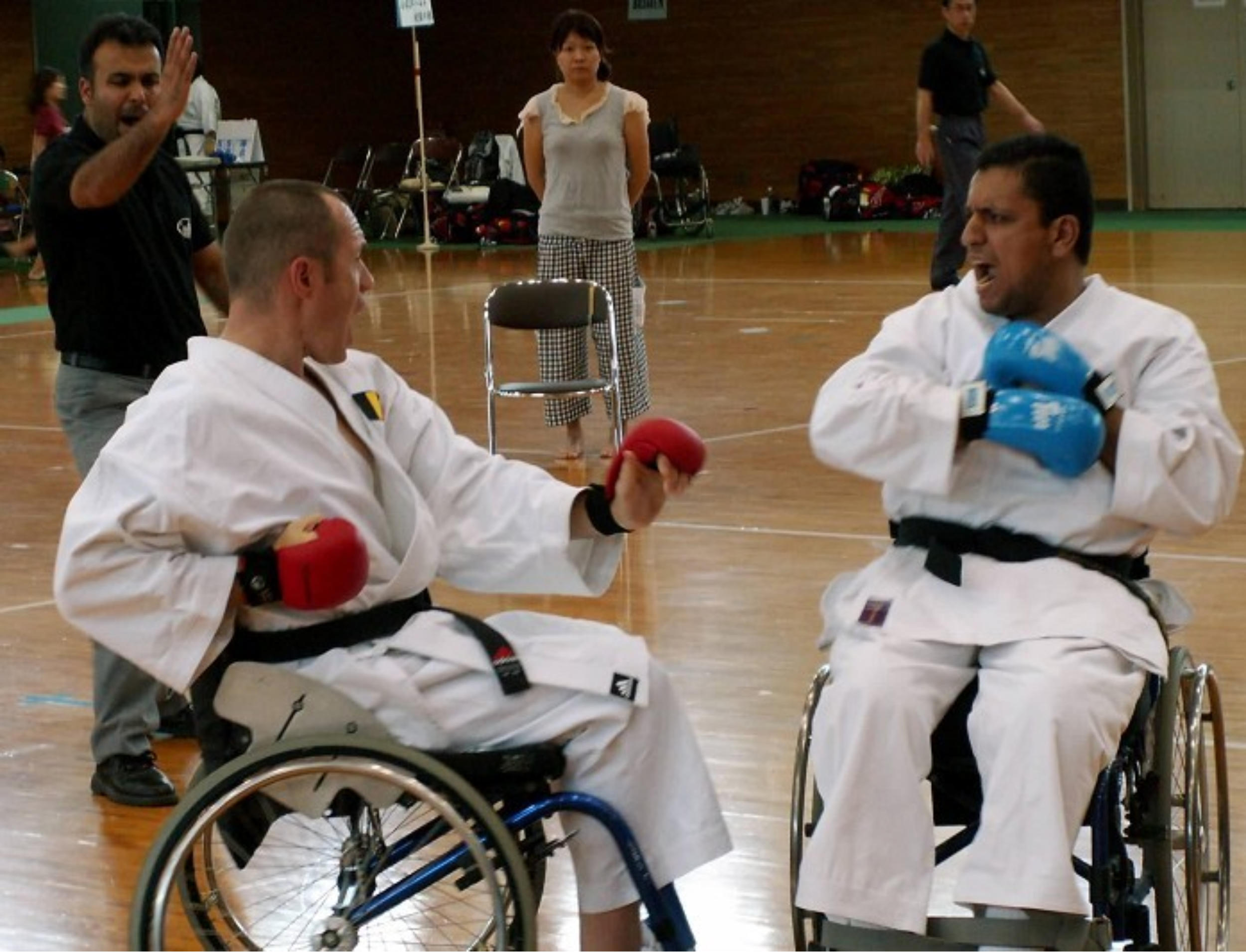
IKC coach people from all backgrounds and of al
abilities. Our coaches differentiate, to individualise
their coaching, ensuring that every participant, that
attends their session, irrespective of their level,
receives the same levels of respect and support.
IKC coaches have an open mind and are not afraid to
ask the relevant people the relevant questions.
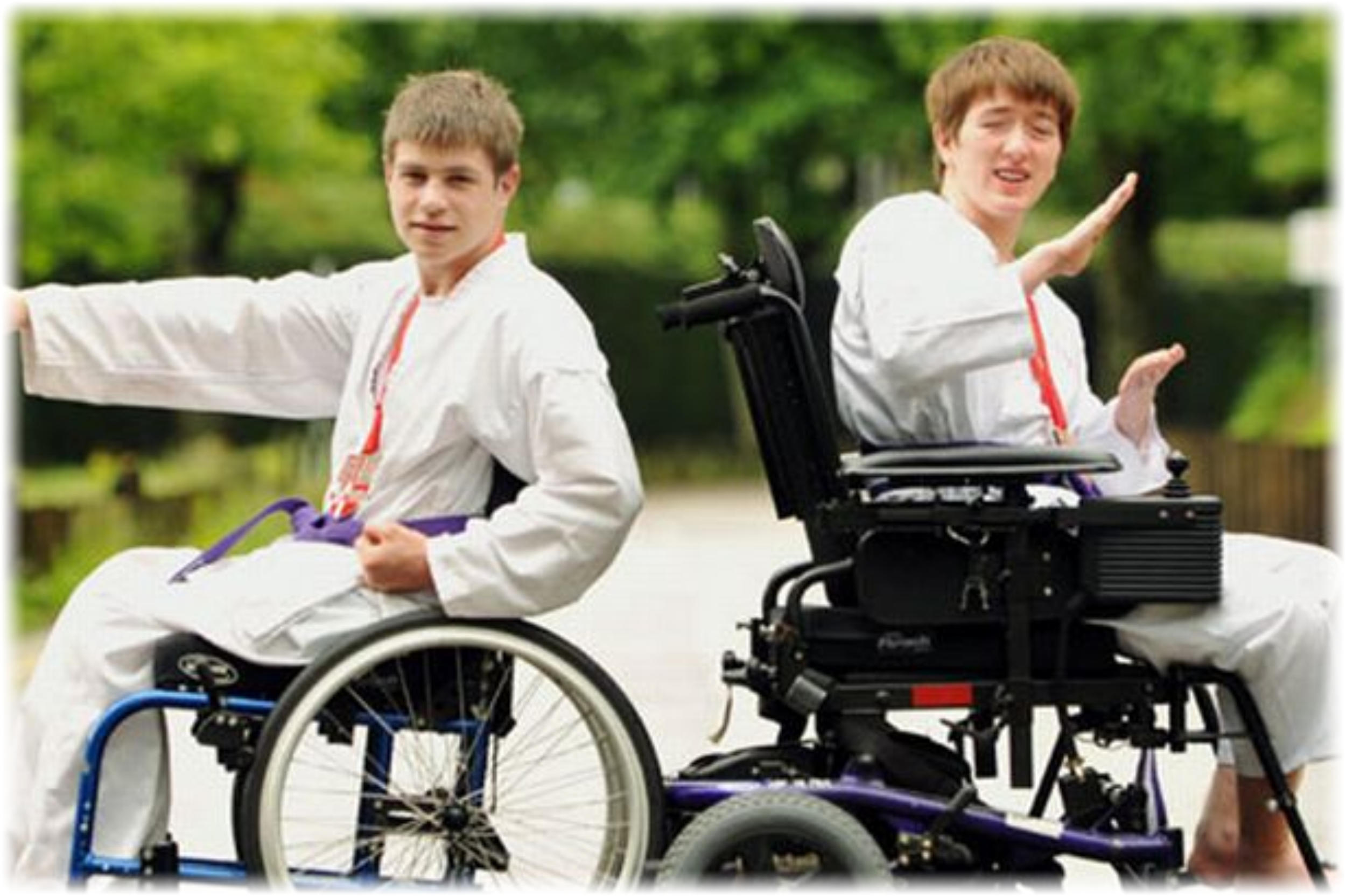
We have members with cerebral palsy, who have
developed their Karate to an extent that they
overcome some of their condition and gained so much
more confidence.
There are three keys areas which provide the greatest
impact on participation, namely disability, gender
(women and girls), and race & ethnicity. Whilst our
focus is on women disability, race and ethnicity we
recognise that as coaches we should be aware of the
impact of faith, sexual orientation, gender identity
and pregnancy and maternity of participants.
Click on
image to
enlarge

Click on image to enlarge

Click on image to enlarge


- Home
- IKC History
- Introduction to Karate
- Karate History
- Other Karate Styles
- Coaching
- Training
- What Will You Learn
- Fitness
- Diversity
- Coaching Children
- Coaching Children Cont'd
- Smart Ideas
- Competition Karate
- Kumite Etiquette
- Kumite Tactics Brief Guide
- Join a Club
- IKC Membership
- IKC Contacts
- Safegurding Contacts
- IKC Documents Policies
- Clothing Equipment
- Chief IKC Instructor Profile
- Senior IKC Instructor Profile
- Info & other sites
KARATE
Child Development
Diversity & Inclusion
Through participation in sport and physical education, young
people learn about the importance of key values such as:
Honesty, Teamwork, Fair play, Respect for themselves and
others, Adherence to rules and how to cope with both
winning and losing.
Sport-based programmes have been shown to improve the
learning performance of children and young people,
encouraging school attendance and a desire to succeed
academically.
Karate training will contribute
to the holistic development of
young people. Children take
part in fun and creative Karate
activities.
Statistically speaking; There
are 6.9 million disabled
people of working age in the
UK representing around 19%
of the total working
population. In addition,
there are 770,000 disabled
children under the age of 16.
IKC coach people from all
backgrounds and of all
abilities. Our coaches
differentiate, to individualise
their coaching, ensuring
that every participant, that
attends their session,
irrespective of their level,
receives the same levels of
respect and support. IKC
coaches have an open mind
and are not afraid to ask the
relevant people the relevant
questions.


Click on image to enlarge
- Home
- IKC History
- Introduction to Karate
- Karate History
- Other Karate Styles
- Coaching
- Training
- What Will You Learn
- Fitness
- Diversity
- Coaching Children
- Coaching Children Cont'd
- Smart Ideas
- Competition Karate
- Kumite Etiquette
- Kumite Tactics Brief Guide
- Join a Club
- IKC Membership
- IKC Contacts
- Safegurding Contacts
- IKC Documents Policies
- Clothing Equipment
- Chief IKC Instructor Profile
- Senior IKC Instructor Profile
- Info & other sites
NSPCC
KARATE
Getting Involved as Parents
Coaching Children
Getting Involved as Coaches
Learning & Attention Issues
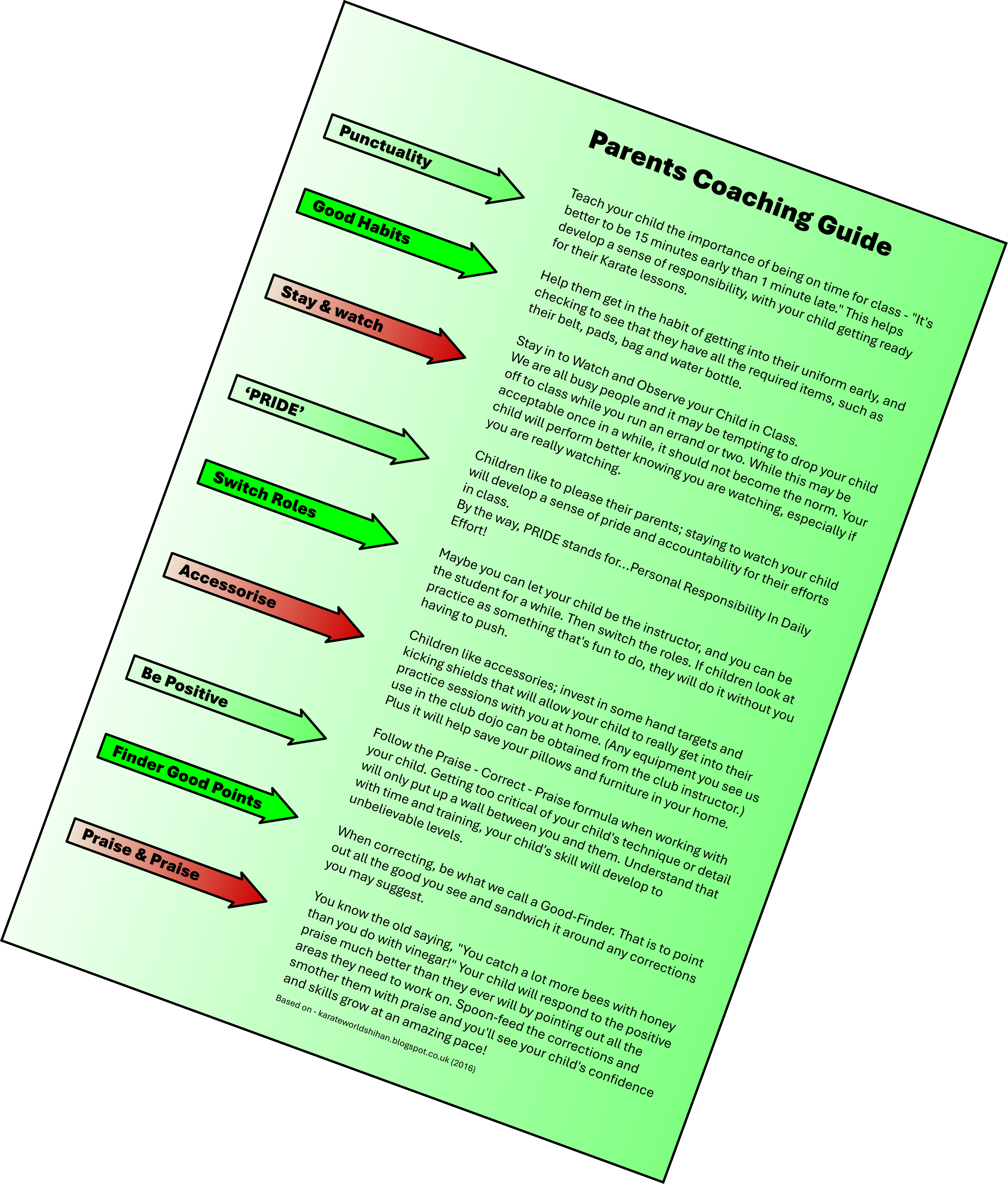
As the parent of your child training at our club, you have
already been involved in their wish to do Karate and taken
them to the class. But that shouldn’t be the end of your
involvement.
As a parent, you are in an advantageous position of being a
positive part of your childs participation in their chosen
activity, Karate.
As coaches of young children, we are well aware of their
desires to please and do well.
The following are just some of the ways we help them to
achieve their desires:
we respect young people in karate and how they want to
train.
we get to know the children we coach. It makes the
session easier and more fun.
we adapt the sessions for the participants.
we ensure young people with disabilities are included in
everything.
we get the children to share ideas, get the children
talking and solving problems for themselves.
we make sure our instructions are clear and precise and
‘KISs’ (”Keep it simples”) to make sure they understand.
we ask them what they think, keep them involved and
keep checking they’re enjoying and understanding it.
we don’t just coach, we also join in ourselves, have a
laugh and have fun with the children.
we have perseverance with them.
we have fun! always enthusiastic and give the children no
option but to come back and learn more.
By following a few
simple tips, you
could have an
amazing impact
on your childs
development,
enjoyment and
success and
hopefully, life long
participation.
Exercise is great for every kid. But children with learning
and attention issues can have a hard time finding a sport
or physical activity that suits them.
They may not have the social or physical skills to
participate on a team. They may not have the coordination
for activities like skating or ballet. They may find it too hard
to follow rules, or they may be bullied or left out.
Many families discover that martial arts and Karate in
particular, are an excellent option. Read on to learn about
what Karate can offer children with learning and attention
issues.
Click on image to enlarge


- Home
- IKC History
- Introduction to Karate
- Karate History
- Other Karate Styles
- Coaching
- Training
- What Will You Learn
- Fitness
- Diversity
- Coaching Children
- Coaching Children Cont'd
- Smart Ideas
- Competition Karate
- Kumite Etiquette
- Kumite Tactics Brief Guide
- Join a Club
- IKC Membership
- IKC Contacts
- Safegurding Contacts
- IKC Documents Policies
- Clothing Equipment
- Chief IKC Instructor Profile
- Senior IKC Instructor Profile
- Info & other sites
KARATE
As Parents
Coaching Children - getting involved
As Coaches
Learning & Attention Issues
As the parent of your child
training at our club, you have
already been involved in
their wish to do Karate and
taken them to the class. As a
parent, you are in an
advantageous position of
being a positive part of your
childs participation in their
chosen activity, Karate.
As coaches of young
children, we are well aware
of their desires to please and
do well. The following are
just some of the ways we
help them to achieve:
we respect young people
in karate and how they
want to train.
we ensure young people
with disabilities are
included in everything.
we get the children to
share ideas, get the
children talking and
solving problems for
themselves.
we have fun! always
enthusiastic and give the
children no option but to
come back and learn
more.
By following a few simple
tips, you could have an
amazing impact on your
childs development,
enjoyment and success
and hopefully, life long
participation.
Children with learning and attention issues can have
a hard time finding a sport or physical activity that
suits them. Karate in particular, is an excellent option
to help children with learning and attention issues.
Click on
image to
enlarge


- Home
- IKC History
- Introduction to Karate
- Karate History
- Other Karate Styles
- Coaching
- Training
- What Will You Learn
- Fitness
- Diversity
- Coaching Children
- Coaching Children Cont'd
- Smart Ideas
- Competition Karate
- Kumite Etiquette
- Kumite Tactics Brief Guide
- Join a Club
- IKC Membership
- IKC Contacts
- Safegurding Contacts
- IKC Documents Policies
- Clothing Equipment
- Chief IKC Instructor Profile
- Senior IKC Instructor Profile
- Info & other sites
NSPCC
KARATE
Learning & Attention Issues cont’d
Click on image to enlarge
Childrens’ Club - Koguma the Karate Cub
Exercise is great for every kid. But children with learning and
attention issues can have a hard time finding a sport or
physical activity that suits them.
They may not have the social or physical skills to participate on
a team. They may not have the coordination for activities like
skating or ballet. They may find it too hard to follow rules, or
they may be bullied or left out.
Many families discover that martial arts and Karate in
particular, are an excellent option. Read on to learn about what
Karate can offer children with learning and attention issues.
There are lots of reasons Karate can be a good match for kids with
learning and attention issues. Here are nine potential benefits:
What Karate can do for Children
‘WHO THINK DIFFERENTLY’
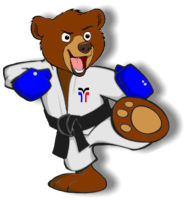
KOGUMA is the mascot Bear
Cub of the IKC.
He is a hard working, tough but
caring bear cub who is here to
help all the young children
develop their skills and
knowledge.He is very often seen
on the certificates given out to
students after lessons for
excellent effort and presentation
(appearance - neat Gi etc.)
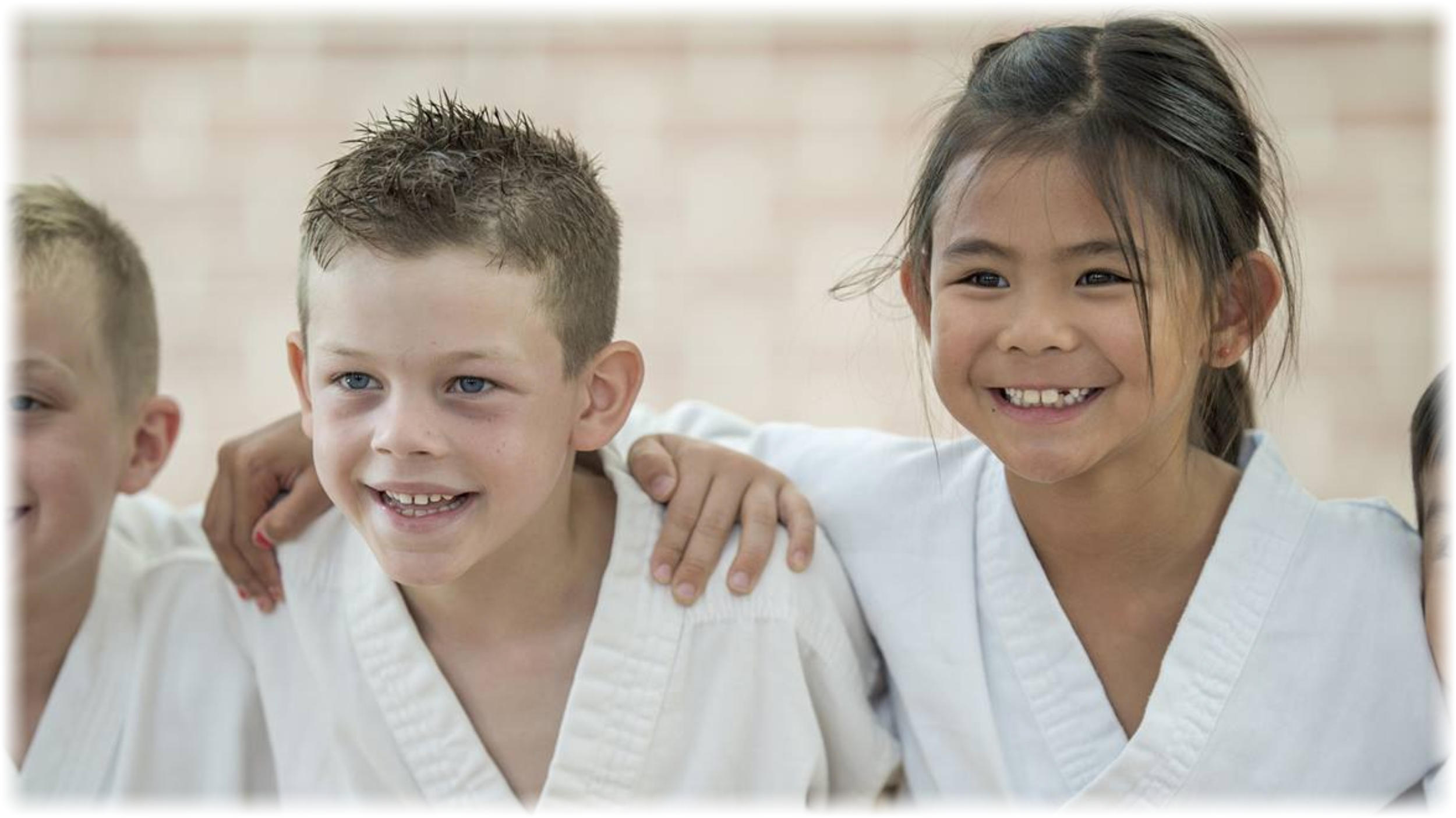
Children who learn and think differently can have a hard time finding a sport that suits them.
Find out why KARATE might be a good fit.
9 Benefits of KARATE for children

Click on images to enlarge


THE KARATE
CUB

- Home
- IKC History
- Introduction to Karate
- Karate History
- Other Karate Styles
- Coaching
- Training
- What Will You Learn
- Fitness
- Diversity
- Coaching Children
- Coaching Children Cont'd
- Smart Ideas
- Competition Karate
- Kumite Etiquette
- Kumite Tactics Brief Guide
- Join a Club
- IKC Membership
- IKC Contacts
- Safegurding Contacts
- IKC Documents Policies
- Clothing Equipment
- Chief IKC Instructor Profile
- Senior IKC Instructor Profile
- Info & other sites
KARATE
Learning & Attention Issues cont’d
Childrens’ Club - Koguma the
Karate Cub
9 Benefits of KARATE for children
Click on images to enlarge
There are lots of reasons Karate can be a good match for kids with
learning and attention issues. Here are nine potential benefits:
What Karate can do for Children
‘WHO THINK DIFFERENTLY’
KOGUMA is the mascot Bear Cub of the IKC.
He is a hard working, tough but caring bear cub who is here to
help all the young children develop their skills and
knowledge.He is very often seen on the certificates given out to
students after lessons for excellent effort and presentation
(appearance - neat Gi etc.)

THE KARATE
CUB


- Home
- IKC History
- Introduction to Karate
- Karate History
- Other Karate Styles
- Coaching
- Training
- What Will You Learn
- Fitness
- Diversity
- Coaching Children
- Coaching Children Cont'd
- Smart Ideas
- Competition Karate
- Kumite Etiquette
- Kumite Tactics Brief Guide
- Join a Club
- IKC Membership
- IKC Contacts
- Safegurding Contacts
- IKC Documents Policies
- Clothing Equipment
- Chief IKC Instructor Profile
- Senior IKC Instructor Profile
- Info & other sites
NSPCC
KARATE
‘SMART’ - ‘IDEAS’ Help their child in Karate
When setting goals for our Karate activities, we try to make sure they are
‘SMART’ goals:
Specific: a specific goal has a much greater chance of being accomplished
than a general goal.
Measurable: we need to be able to measure if the goal has been achieved.
Achievable: we want to Stretch our students but the goal still needs to be
achievable within the activity.
Realistic: we need to set a goal that is realistic to the level of the students we
are coaching and how they are progressing within their grade.
Time specific: by setting a timeframe to achieve the goal, we give the
students time to reflect at the end of it.
We deliver our planned activities to students using ‘IDEAS’.
Introduce: when we introduce a new Karate activity, skill or technique it is
important for our students to understand what they are learning and why they
are learning it.
Demonstrations: demonstration is a vital part of coaching a new skill in order
for our students to form a picture of what they are going to be doing.
Explanations: providing a good demonstration with an effective explanation
helps the students to clearly understand what they are going to do.
Activity: during the activity, we will draw on all our coaching skills to ensure
students understand what they're doing.
Summary: at the end of each session we summarise what has taken place.
SMART
Specific
Measurable
Achievable
Realistic
Time specific
IDEAS
Introduce
Demonstrations
Explanations
Activity
Summary
When at home, you can help your child with their training. Use
the following points as a guide; they will have plenty to practice.


- Home
- IKC History
- Introduction to Karate
- Karate History
- Other Karate Styles
- Coaching
- Training
- What Will You Learn
- Fitness
- Diversity
- Coaching Children
- Coaching Children Cont'd
- Smart Ideas
- Competition Karate
- Kumite Etiquette
- Kumite Tactics Brief Guide
- Join a Club
- IKC Membership
- IKC Contacts
- Safegurding Contacts
- IKC Documents Policies
- Clothing Equipment
- Chief IKC Instructor Profile
- Senior IKC Instructor Profile
- Info & other sites
KARATE
‘SMART’ - ‘IDEAS’ Help their child in Karate
When setting goals for our Karate
activities, we try to make sure they are
‘SMART’ goals:
Specific: a specific goal has a much
greater chance of being accomplished
than a general goal.
Measurable: we need to be able to
measure if the goal has been
achieved.
Achievable: we want to Stretch our
students but the goal still needs to be
achievable within the activity.
Realistic: we need to set a goal that is
realistic to the level of the students we
are coaching and how they are
progressing within their grade.
Time specific: by setting a timeframe
to achieve the goal, we give the
students time to reflect at the end of it.
We deliver our planned activities to
students using ‘IDEAS’.
Introduce: when we introduce a new
Karate activity, skill or technique it is
important for our students to
understand what they are learning
and why they are learning it.
Demonstrations: demonstration is a
vital part of coaching a new skill in
order for our students to form a
picture of what they are going to be
doing.
Explanations: providing a good
demonstration with an effective
explanation helps the students to
clearly understand what they are
going to do.
Activity: during the activity, we will
draw on all our coaching skills to
ensure students understand what
they're doing.
Summary: at the end of each
session we summarise what has
taken place.
SMART
Specific
Measurable
Achievable
Realistic
Time specific
IDEAS
Introduce
Demonstrations
Explanations
Activity
Summary
When at home, you can help your child with their training. Use the
following points as a guide; they will have plenty to practice.


- Home
- IKC History
- Introduction to Karate
- Karate History
- Other Karate Styles
- Coaching
- Training
- What Will You Learn
- Fitness
- Diversity
- Coaching Children
- Coaching Children Cont'd
- Smart Ideas
- Competition Karate
- Kumite Etiquette
- Kumite Tactics Brief Guide
- Join a Club
- IKC Membership
- IKC Contacts
- Safegurding Contacts
- IKC Documents Policies
- Clothing Equipment
- Chief IKC Instructor Profile
- Senior IKC Instructor Profile
- Info & other sites
NSPCC
KARATE
What Equipment do you need?
Competition Karate
WKF Kata & Kumite
Competition Rules
WKF Para-Karate
Rules
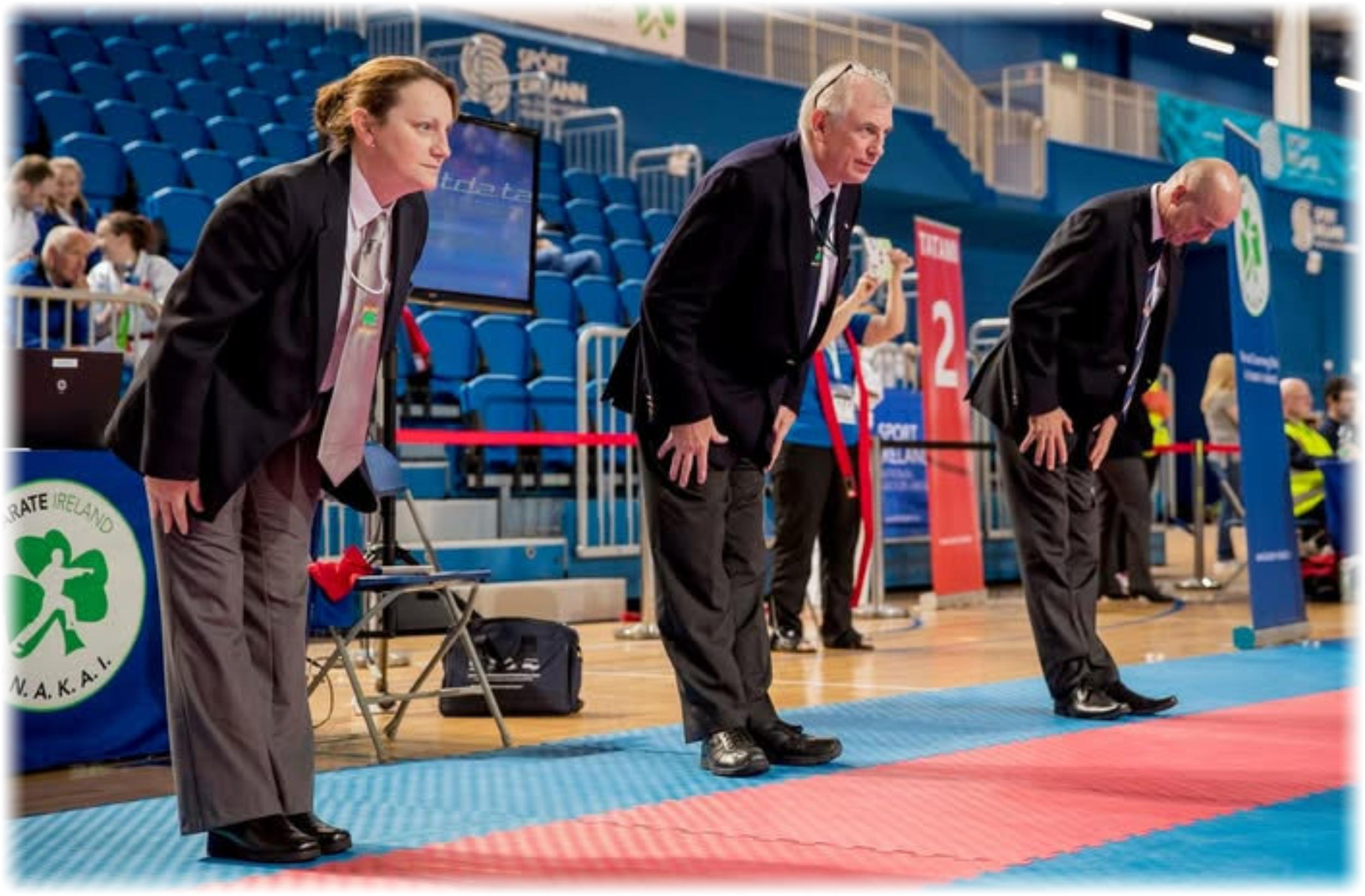
Karate Referees make it a Competition
So you’ve been training for a short while and starting to learn and
understand what karate is all about; but how effective is what
you’ve learnt so far? One way to find out is to compete against
others of the same grade and size as you (size makes it fairer).
The idea of competition fighting, or KUMITE (freestyle figfhting) is
to outwit the opponent through good technique along with good
sporting attitude, vigorous application of the techniques, good
focus (zanshin), good timing of techniques and the correct
distance when delivering techniques. These attributes are listed
in the WKF Kumite Rules below.
Both Kumite and Kata competition events can be INDIVIDUAL and TEAM events.
A competition can be as small as two people competing against each other in the local
club and as big as the World Championships where hundreds of competitors from all
over the world gather to compete.
For KUMITE, Compulsory Protective Equipment is required.
Because the fighters are either on the WHITE side (Ao) or
the RED side (Aka) they must have Mitts, Shin Pads and
Foot Protectors in that colour.
a Gum Shield, Body Protector, (Female) Chest Protector,
and if worn, a WKF approved Groin Guard; and of course, a
WKF approved Karate Gi.
For KATA, no special equipment required - just ensure that
the Karate Gi complies to WKF rules.
“No Referees and Officials - no competition”.
These are the people who work hard to ensure the rules and regulations of the competition
are adhered to and that the event runs smoothly. The WKF Competition Rules document
must be fully understood by Referees and Judges before they qualify. Coaches should also
have a good knowledge of the rules before sending anyone to compete.
Competition Karate under the rules of the
WKF, consists of TWO main elements:
1.
KUMITE (Freestyle fighting)
2.
KATA (Form/Technique/Movement)
Karate was an Olympic Sport at the Tokyo Olympics in 2020 in Japan.
Click on image to enlarge
Click on images to open in new window



- Home
- IKC History
- Introduction to Karate
- Karate History
- Other Karate Styles
- Coaching
- Training
- What Will You Learn
- Fitness
- Diversity
- Coaching Children
- Coaching Children Cont'd
- Smart Ideas
- Competition Karate
- Kumite Etiquette
- Kumite Tactics Brief Guide
- Join a Club
- IKC Membership
- IKC Contacts
- Safegurding Contacts
- IKC Documents Policies
- Clothing Equipment
- Chief IKC Instructor Profile
- Senior IKC Instructor Profile
- Info & other sites
KARATE
What Equipment
do you need?
Competition Karate
WKF Kata &
Kumite
Competition
Rules
WKF Para-Karate
Rules
Karate Referees
make it a
Competition
So you’ve been training for a
short while and starting to
learn and understand what
karate is all about; but how
effective is what you’ve
learnt so far? One way to
find out is to compete
against others of the same
grade and size as you (size
makes it fairer).
The idea of competition
fighting, or KUMITE (freestyle
figfhting) is to outwit the
opponent through good
technique along with good
sporting attitude, vigorous
application of the
techniques, good focus
(zanshin), good timing of
techniques and the correct
distance when delivering
techniques. These attributes
are listed in the WKF Kumite
Rules below.
Compulsory Protective
Equipment is required.
Hand Mitts, Shin Pads, Foot
Protectors, Gum Shield,
Body Protector, (Female)
Chest Protector, a WKF
approved Groin Guard; and
of course, a WKF approved
Karate Gi.
“No Referees and Officials -
no competition”. These are
the people who work hard to
ensure the event runs
smoothly.
Karate was an Olympic Sport at the
Tokyo Olympics in 2020 in Japan.
Click on images to
open in new window



- Home
- IKC History
- Introduction to Karate
- Karate History
- Other Karate Styles
- Coaching
- Training
- What Will You Learn
- Fitness
- Diversity
- Coaching Children
- Coaching Children Cont'd
- Smart Ideas
- Competition Karate
- Kumite Etiquette
- Kumite Tactics Brief Guide
- Join a Club
- IKC Membership
- IKC Contacts
- Safegurding Contacts
- IKC Documents Policies
- Clothing Equipment
- Chief IKC Instructor Profile
- Senior IKC Instructor Profile
- Info & other sites
NSPCC
KARATE
Kumite & Kata events
Free Sparring; Safe & Fun - Kumite
To supplement the WKF Competition Rules, the WKF have
produced illustrated presentations and video guides of
both the Kumite and Kata rules. They have a lot of useful
information for both competitors and coaches.
Presentations
When you first begin training, you will probably be keen to
start sparring. However, you will need to be patient as you
will have to master some of the very basic techniques first.
Combinations of techniques will also be required such as
a block and counterpunch and of course - you will have
practiced pre-arranged sparring with a partner to get your
distance and timing correct.
We have looked at the protective equipment required
already for kumite / sparring, however, there are some
elements of SAFETY to consider:
Sparring should not take place on a concrete or stone
floor.
Gum should not be chewed as there is a chocking risk.
finger and toe nails must be short and clean.
Earrings and necklaces to be removed.
Long hair must be tied back with a simple elasticated
band and no hairs grips allowed.
Spectacles cannot be worn and any contact lenses can
only be soft ones.

Click on
image to
enlarge
Click on images to open in new window
Videos





- Home
- IKC History
- Introduction to Karate
- Karate History
- Other Karate Styles
- Coaching
- Training
- What Will You Learn
- Fitness
- Diversity
- Coaching Children
- Coaching Children Cont'd
- Smart Ideas
- Competition Karate
- Kumite Etiquette
- Kumite Tactics Brief Guide
- Join a Club
- IKC Membership
- IKC Contacts
- Safegurding Contacts
- IKC Documents Policies
- Clothing Equipment
- Chief IKC Instructor Profile
- Senior IKC Instructor Profile
- Info & other sites
KARATE
Kumite & Kata events
Free Sparring; Safe & Fun - Kumite
When you first begin training, you will probably be keen to
start sparring. However, you will need to be patient as you
will have to master some of the very basic techniques first.
Combinations of techniques will also be required such as
a block and counterpunch and of course - you will have
practiced pre-arranged sparring with a partner to get your
distance and timing correct.
Presentations
Click on
image to
enlarge

Videos


- Home
- IKC History
- Introduction to Karate
- Karate History
- Other Karate Styles
- Coaching
- Training
- What Will You Learn
- Fitness
- Diversity
- Coaching Children
- Coaching Children Cont'd
- Smart Ideas
- Competition Karate
- Kumite Etiquette
- Kumite Tactics Brief Guide
- Join a Club
- IKC Membership
- IKC Contacts
- Safegurding Contacts
- IKC Documents Policies
- Clothing Equipment
- Chief IKC Instructor Profile
- Senior IKC Instructor Profile
- Info & other sites
NSPCC
KARATE
Kumite Etiquette and Conventions
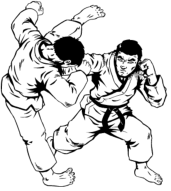
The idea of free sparring in the club dojo is to practice and
improve Kumite skills; in a competition, the idea is to beat
your opponent by scoring points awarded by the referees
for techniques delivered as prescribed in the rules.
What sparring is not, is an opportunity to have a free for all
fight with the intention of hurting your opponent.
In order to prevent a sparring match from degenerating,
simple rules should be followed as outlined on the
opposite chart. Keeping ones ‘cool’ is probably one of the
most important things you can do in a match.
Direct attacks to the arms and legs are not allowed.
Open hand techniques (attacks) to the face and groin
are not allowed.
Attacking the throat and the groin not allowed.
Head butting is prohibited.
You are not allowed to seize and hold onto the opponent.
All technically correct (clean) controlled techniques
to the opponent’s face and body should be
acknowledged momentarily by the opponent.
Continuously back pedalling (going backwards) is not allowed.
Don’t step outside of the fighting area unless pushed
or knocked out.
Both fighters must take proper care of their own safety
by maintaining an effective guard at all times.
All techniques must be controlled and delivered with the
lightest touch. It is especially important that extreme force is
not used to to head with face punches and kicks.
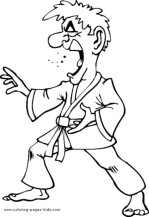

Uncontrolled and heavy landing techniques such as a punch
or kick to the face and knocking the head back are not
allowed.
Prohibited Techniques & Behaviour
- Home
- IKC History
- Introduction to Karate
- Karate History
- Other Karate Styles
- Coaching
- Training
- What Will You Learn
- Fitness
- Diversity
- Coaching Children
- Coaching Children Cont'd
- Smart Ideas
- Competition Karate
- Kumite Etiquette
- Kumite Tactics Brief Guide
- Join a Club
- IKC Membership
- IKC Contacts
- Safegurding Contacts
- IKC Documents Policies
- Clothing Equipment
- Chief IKC Instructor Profile
- Senior IKC Instructor Profile
- Info & other sites
KARATE
Kumite Etiquette and Conventions
The idea of free sparring in the club dojo is to practice and
improve Kumite skills; in a competition, the idea is to beat your
opponent by scoring points awarded by the referees for
techniques delivered as prescribed in the rules.
What sparring is not, is an opportunity
to have a free for all fight with the
intention of hurting your opponent.
Both fighters must take proper care of
their own safety by maintaining an
effective guard at all times.
All techniques must be controlled and delivered with
the lightest touch. It is especially important that
extreme force is not used to to head with face punches
and kicks.
•
Uncontrolled and heavy landing techniques such
as a punch or kick to the face and knocking the
head back are not allowed.
•
Open hand techniques (attacks) to the face and
groin are not allowed.
•
Attacking the throat and the groin not allowed.
•
Direct attacks to the arms and legs are not allowed.
•
Head butting is prohibited.
•
You are not allowed to seize and hold onto the
opponent.
•
All technically correct (clean) controlled
techniques to the opponent’s face and body
should be acknowledged momentarily by the
opponent.
•
Continuously back pedalling (going backwards) is
not allowed.
•
Don’t step outside of the fighting area unless
pushed or knocked out.


- Home
- IKC History
- Introduction to Karate
- Karate History
- Other Karate Styles
- Coaching
- Training
- What Will You Learn
- Fitness
- Diversity
- Coaching Children
- Coaching Children Cont'd
- Smart Ideas
- Competition Karate
- Kumite Etiquette
- Kumite Tactics Brief Guide
- Join a Club
- IKC Membership
- IKC Contacts
- Safegurding Contacts
- IKC Documents Policies
- Clothing Equipment
- Chief IKC Instructor Profile
- Senior IKC Instructor Profile
- Info & other sites
NSPCC
KARATE
Kumite Tactics - Brief Guide
DISTANCE
Fight at a distance which suits you and/or which is
unsuitable for your opponent.
Crowding taller opponents, so their longer reach is of no
advantage to them.
keep well back from those who prefer punches, so they
are forced always to step forward, or to rely on kicks.
Don’t let the opponent corner you.
Always move as far as is necessary to make an
opponents attack miss - but no further.
TIMING
The aggressive fighter will move in as soon as you begin
a technique - but watch out for feints! (where the
opponents pretends to start an attack to draw you out
then delivers a technique).
Always look at the opponents head and shoulders, and
when they move be ready.
The defensive fighter waits until the opponents
technique has failed, then moves in even as it is being
retrieved.
Kicks take a long time to pull back and until they are, the
opponent’s defensive shield will be weak.
But never move too far away as you avoid the attack or it
will take too long to closer again.
If you naturally are an aggressive fighter, then practice
being a defensive fighter too because that way, you will
double your capabilities.
LINE
Always try and inch your way onto the closed side
of the opponent so they always have to turn
before he/she can launch an attack/technique at
you.
Practise this by taking up left fighting stance
against somone in left stance, and by moving until
both your front feet are in line. Then turn your
body slightly so you face the opponent directly.
They are now turned slightly away from you.
TARGETING
Straight punches into the face close off the opponents view.
Circular strikes are not nearly so effective, though they can
creep in around the very edge of the opponent’s defensive
shield.
Aim your front kicks high and to the side of your opponents
chest, where they are difficult to block.
COMBINATIONS
Overload the opponent’s defensive shield by a flurry of effective
techniques. .
The techniques must arrive at their targets in quick succession,
otherwise your opponent will see them as single techniques
and the advantage will be lost.
Space the attacking techniques out , so one goes for the face
and the second to the low stomach etc.. this forces the
opponent to switch his attention from high to low.
Mix circular with straight techniques to make things even more
difficult for them.
PSYCHE OUT THE OPPONENT
try stamping down hard with your lead foot, as though you
intend to go into your opponent - How do they react?
If they pull back from you, then they are a defensive fighter and
you should hold back so they have to switch onto being an
attacker.
If they advance towards you, then they are an attacking fighter
and you should immediately put them on the defensive by
pushing forward and closing them down.
VARY YOUR FIGHTING HABITS
We all have favourite techniques and tactics that tend to appear
at every sparring session. Make sure the opponent doesn’t ‘suss
out’ your next move by being too predictable.
Change your fighting stance side often and be an attacker AND a
Defender.
Abridged - Traditional Karate Magazine (June 2000)
- Home
- IKC History
- Introduction to Karate
- Karate History
- Other Karate Styles
- Coaching
- Training
- What Will You Learn
- Fitness
- Diversity
- Coaching Children
- Coaching Children Cont'd
- Smart Ideas
- Competition Karate
- Kumite Etiquette
- Kumite Tactics Brief Guide
- Join a Club
- IKC Membership
- IKC Contacts
- Safegurding Contacts
- IKC Documents Policies
- Clothing Equipment
- Chief IKC Instructor Profile
- Senior IKC Instructor Profile
- Info & other sites
KARATE
Kumite Tactics - Brief Guide
DISTANCE
Fight at a distance which suits
you.
Crowding taller opponents.
keep well back from those who
prefer punches.
Don’t let the opponent corner
you.
Always move as far as is
necessary.
TIMING
The aggressive fighter will move
in as soon as you begin a
technique.
Always look at the opponents
head and shoulders, and when
they move be ready.
The defensive fighter waits until
the opponents technique has
failed.
Kicks take a long time to pull
back and until they are, the
opponent’s defensive shield
will be weak.
Never move too far away as you
avoid the attack or it will take
too long to closer again.
If you naturally are an
aggressive fighter, practice
being a defensive fighter too.
TARGETING
Straight punches into the face
close off the opponents view.
Circular strikes are not nearly
so effective.
Aim your front kicks high and to
the side of your opponents
chest, where they are difficult
to block.
COMBINATIONS
Overload the opponent’s
defensive shield by a flurry of
effective techniques. .
The techniques must arrive at
their targets in quick
succession.
Space the attacking
techniques out so one goes for
the face and the second to the
low stomach etc.. this forces
the opponent to switch his
attention from high to low.
Mix circular with straight
techniques to make things
even more difficult for them.
PSYCHE OUT THE OPPONENT
Try stamping down hard with
your lead foot - How do they
react?
If they pull back from you, then
they are a defensive fighter
and you should hold back so
they have to switch onto being
an attacker.
If they advance towards you,
then they are an attacking
fighter and you should
immediately put them on the
defensive by pushing forward
and closing them down.
Click on Link
Guide from
Traditional
Karate
Magazine
(June 2000)
‘Abridged’
- Home
- IKC History
- Introduction to Karate
- Karate History
- Other Karate Styles
- Coaching
- Training
- What Will You Learn
- Fitness
- Diversity
- Coaching Children
- Coaching Children Cont'd
- Smart Ideas
- Competition Karate
- Kumite Etiquette
- Kumite Tactics Brief Guide
- Join a Club
- IKC Membership
- IKC Contacts
- Safegurding Contacts
- IKC Documents Policies
- Clothing Equipment
- Chief IKC Instructor Profile
- Senior IKC Instructor Profile
- Info & other sites
NSPCC
KARATE
Join a Club
“Our after school clubs are popular”.
If you would like to see a Karate club
at your school, please contact us for
information.
Our childrens classes are very popular
and are conducted in a safe and friendly
atmosphere with a focus on FUN and
FITNESS
Children are treated as individuals and
receive the attention and perform tasks
appropriate to their level of skill.
Parents and teachers regularly comment
on the improvement of behaviour and
attention levels of children who train
regularly at our IKC clubs.
IKC have clubs in several areas.
Contact details below for information about classes.
St Mark’s Church Centre
Rose Lane
Marks Gate
ROMFORD
ESSEX RM6 5NR
Theydon Bois Community
& Youth Trust Hall
Loughton Lane,
THEYDON BOIS
ESSEX CM16 7JJ
SATURDAYS
9:00 - 10:00am
SUNDAYS
9:00 - 10:00am
SCAN WITH YOUR
PHONE FOR MAP
SCAN WITH YOUR
PHONE FOR MAP


Current IKC Clubs

Links to other IKC Member Clubs and
Venues can be found on our Information
& Other Site page


- Home
- IKC History
- Introduction to Karate
- Karate History
- Other Karate Styles
- Coaching
- Training
- What Will You Learn
- Fitness
- Diversity
- Coaching Children
- Coaching Children Cont'd
- Smart Ideas
- Competition Karate
- Kumite Etiquette
- Kumite Tactics Brief Guide
- Join a Club
- IKC Membership
- IKC Contacts
- Safegurding Contacts
- IKC Documents Policies
- Clothing Equipment
- Chief IKC Instructor Profile
- Senior IKC Instructor Profile
- Info & other sites
KARATE
Join a Club
“Our after school clubs are popular”.
If you would like to see a Karate club
at your school, please contact us for
information.
St Mark’s Church Centre
Rose Lane
Marks Gate
ROMFORD
ESSEX RM6 5NR
Theydon Bois Community
& Youth Trust Hall
Loughton Lane,
THEYDON BOIS
ESSEX CM16 7JJ
SATURDAYS
9:00 - 10:00am
SUNDAYS
9:00 - 10:00am
SCAN WITH YOUR
PHONE FOR MAP
SCAN WITH YOUR
PHONE FOR MAP
Current IKC Clubs


- Home
- IKC History
- Introduction to Karate
- Karate History
- Other Karate Styles
- Coaching
- Training
- What Will You Learn
- Fitness
- Diversity
- Coaching Children
- Coaching Children Cont'd
- Smart Ideas
- Competition Karate
- Kumite Etiquette
- Kumite Tactics Brief Guide
- Join a Club
- IKC Membership
- IKC Contacts
- Safegurding Contacts
- IKC Documents Policies
- Clothing Equipment
- Chief IKC Instructor Profile
- Senior IKC Instructor Profile
- Info & other sites
NSPCC

KARATE
Member Associations, Clubs & Individuals of IKC
IKC & Governing Body Membership
British
Karate
Federation

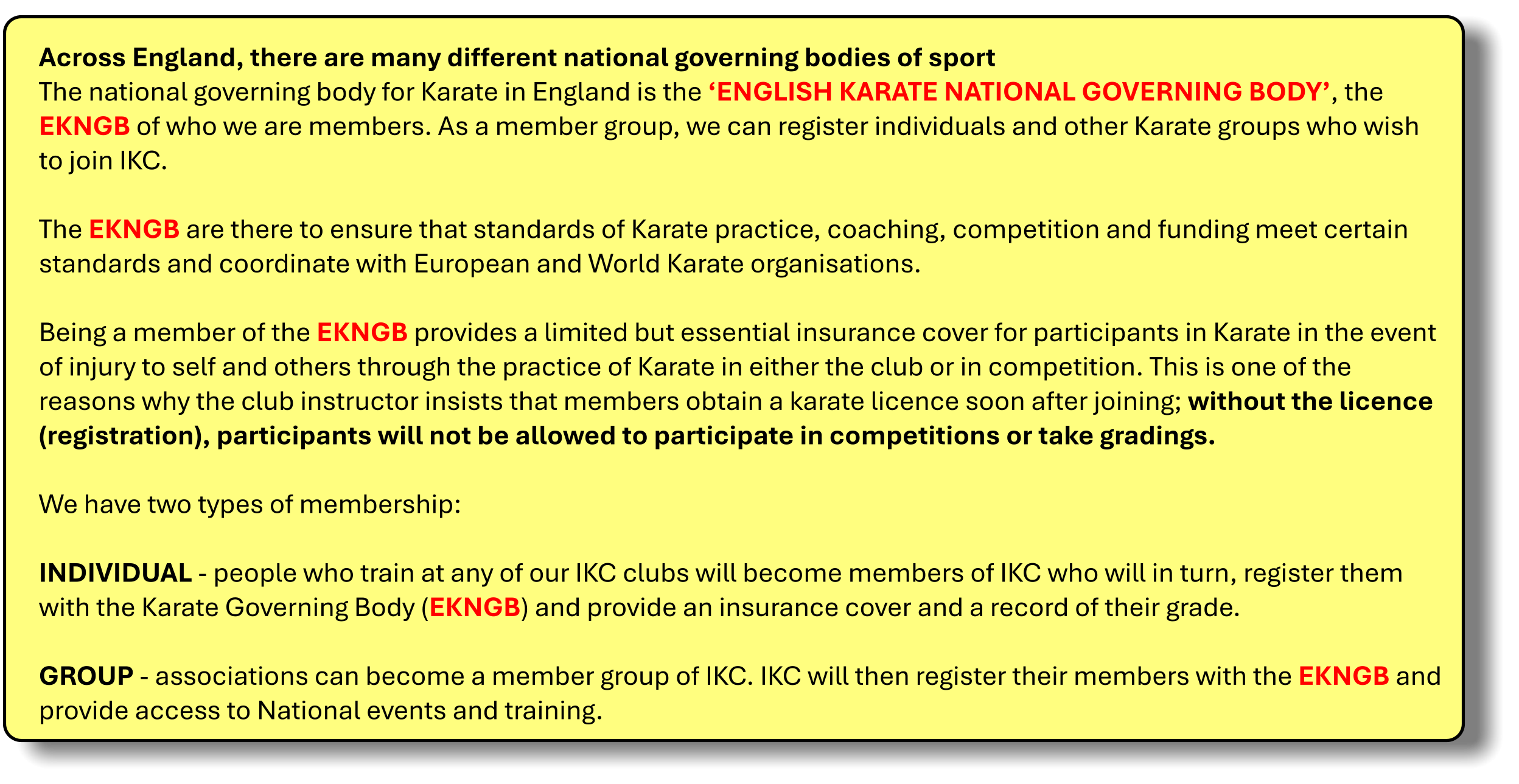
What being a
Member of
the Karate
National
Governing
Body means


Click on Logos for link











ABC
CLUB





Click on image to enlarge



IKC Clubs & Individuals
Karate Federations &
Governing Bodies for
British Four Nations


ENGLISH
KARATE
NATIONAL
GOVERNING
BODY

ENGLISH KARATE
NATIONAL
GOVERNING BODY
MEMBERSHIP
REGISTRATION








- Home
- IKC History
- Introduction to Karate
- Karate History
- Other Karate Styles
- Coaching
- Training
- What Will You Learn
- Fitness
- Diversity
- Coaching Children
- Coaching Children Cont'd
- Smart Ideas
- Competition Karate
- Kumite Etiquette
- Kumite Tactics Brief Guide
- Join a Club
- IKC Membership
- IKC Contacts
- Safegurding Contacts
- IKC Documents Policies
- Clothing Equipment
- Chief IKC Instructor Profile
- Senior IKC Instructor Profile
- Info & other sites
KARATE
IKC & Governing Body Membership

Click on Logos for link
Click on image to enlarge


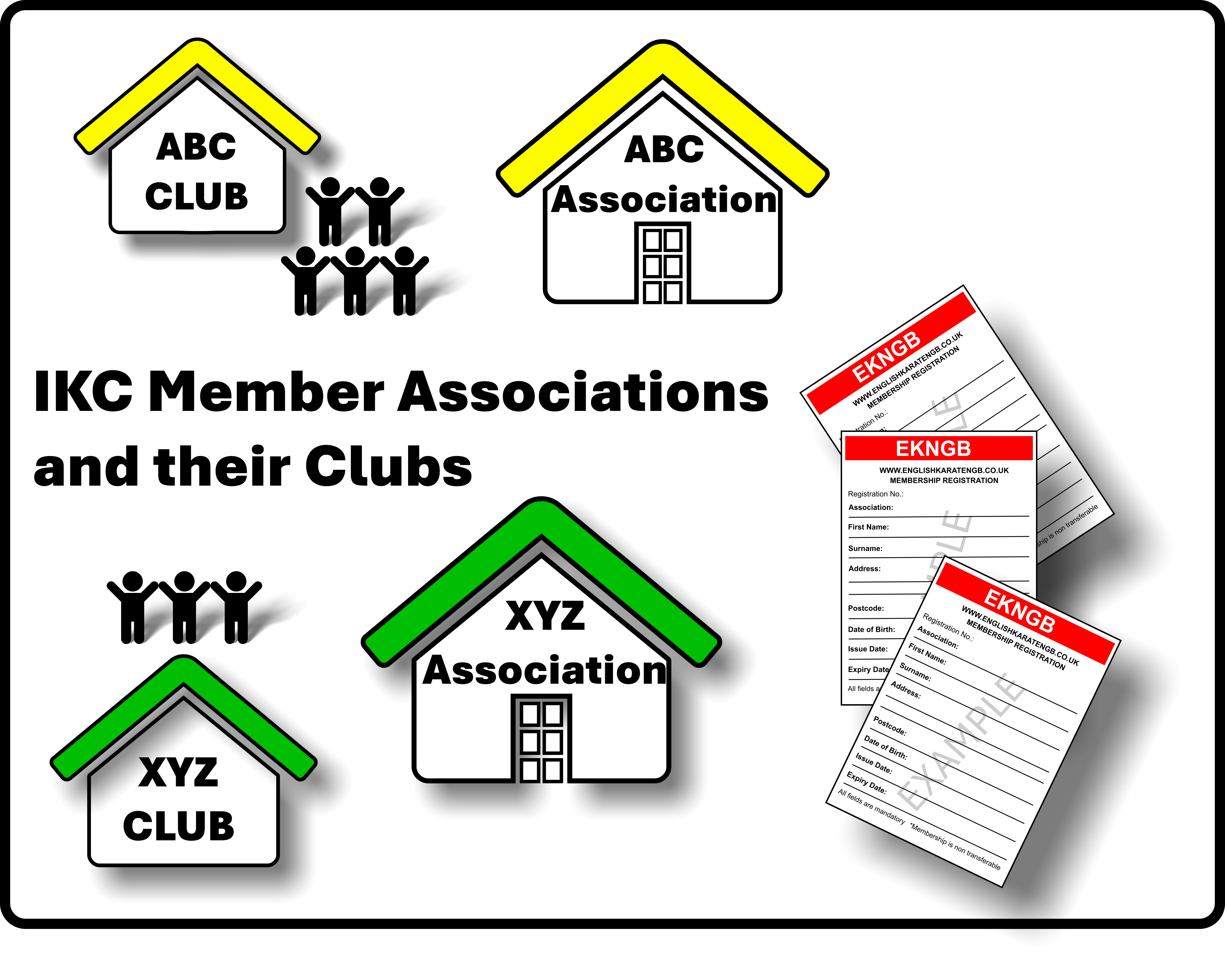
Licence &
Registration Slip
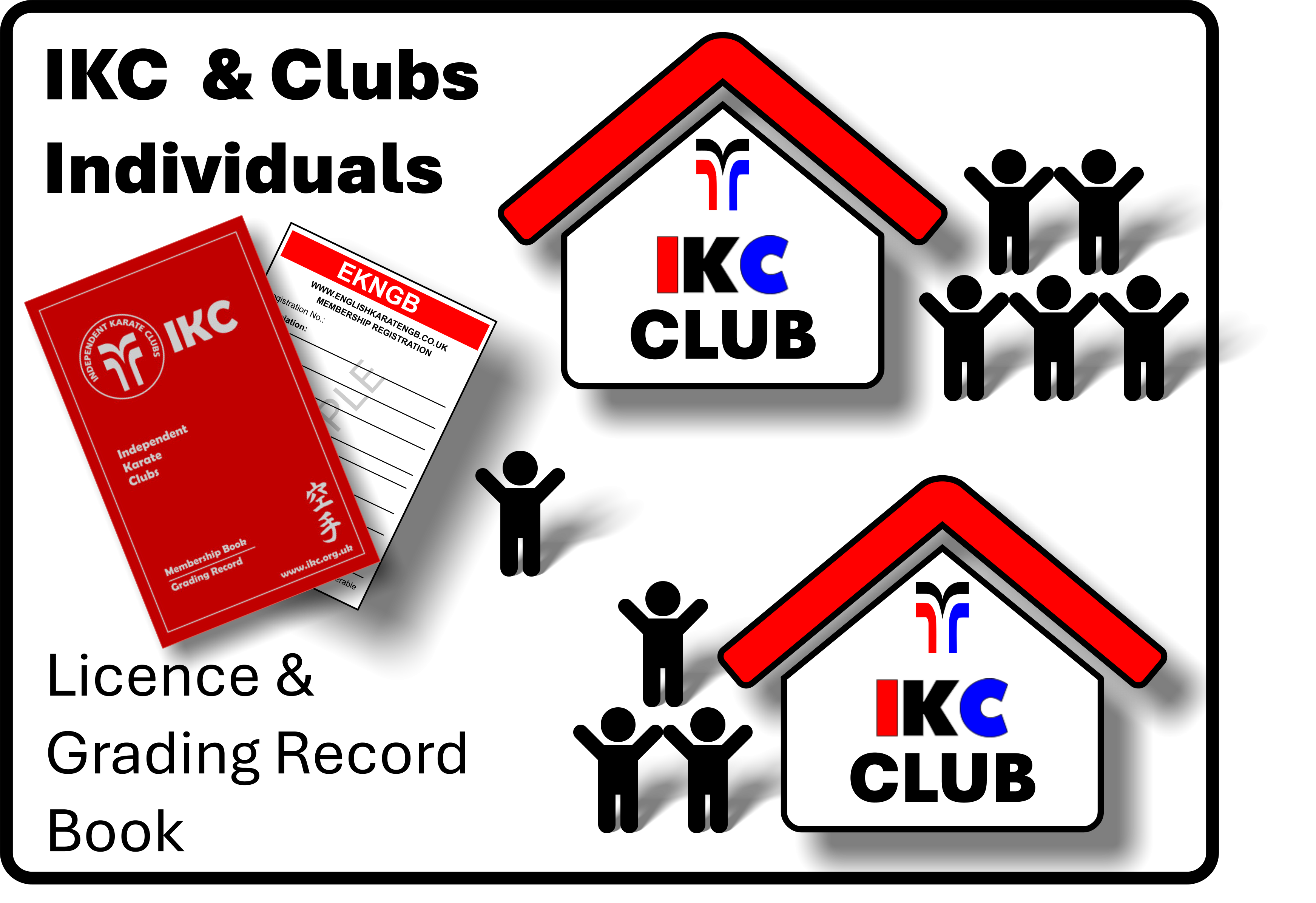
- Home
- IKC History
- Introduction to Karate
- Karate History
- Other Karate Styles
- Coaching
- Training
- What Will You Learn
- Fitness
- Diversity
- Coaching Children
- Coaching Children Cont'd
- Smart Ideas
- Competition Karate
- Kumite Etiquette
- Kumite Tactics Brief Guide
- Join a Club
- IKC Membership
- IKC Contacts
- Safegurding Contacts
- IKC Documents Policies
- Clothing Equipment
- Chief IKC Instructor Profile
- Senior IKC Instructor Profile
- Info & other sites
NSPCC
KARATE
IKC Contacts
Or call:
07904 975 918
Contact details
Select to email:
Information about joining a class.
Class times, Directions to club venues,
Gradings etc..
Need a IKC licence
Questions about the application
Where’s my licence? etc..
Groups wishing to join IKC
Schools wishing to contact IKC
Need to buy equipment
Want information not found on web site etc..
Need to speak to an instructor
Would like to know how your child is
progressing; or simply ask a question.
Need to contact us about a concern. This
link takes you to our IKC Safeguarding
Contacts Page.


- Home
- IKC History
- Introduction to Karate
- Karate History
- Other Karate Styles
- Coaching
- Training
- What Will You Learn
- Fitness
- Diversity
- Coaching Children
- Coaching Children Cont'd
- Smart Ideas
- Competition Karate
- Kumite Etiquette
- Kumite Tactics Brief Guide
- Join a Club
- IKC Membership
- IKC Contacts
- Safegurding Contacts
- IKC Documents Policies
- Clothing Equipment
- Chief IKC Instructor Profile
- Senior IKC Instructor Profile
- Info & other sites
KARATE
IKC Contacts
Information about joining a class.
Class times, Directions to club venues,
Gradings etc..
Need a IKC licence - Questions about the
application- Where’s my licence? etc..
Groups wishing to join IKC
Schools wishing to contact IKC
Need to buy equipment
Need to speak to an instructor
Would like to know how your child is
progressing; or simply ask a question.
Need to contact us about a concern. This
link takes you to our IKC Safeguarding
Contacts Page.


- Home
- IKC History
- Introduction to Karate
- Karate History
- Other Karate Styles
- Coaching
- Training
- What Will You Learn
- Fitness
- Diversity
- Coaching Children
- Coaching Children Cont'd
- Smart Ideas
- Competition Karate
- Kumite Etiquette
- Kumite Tactics Brief Guide
- Join a Club
- IKC Membership
- IKC Contacts
- Safegurding Contacts
- IKC Documents Policies
- Clothing Equipment
- Chief IKC Instructor Profile
- Senior IKC Instructor Profile
- Info & other sites
NSPCC
KARATE
(Select to email)
What happens after you report a concern:
Record: The Designated Safeguarding Lead (DSL), Colin
Constable, confidentially records the details, including
dates, names, and specific observations.
Assess: The DSL assesses the immediacy of the risk. If
there is immediate danger, emergency services (999) are
contacted straight away.
Consult: The DSL reviews the concern against the English
Karate National Governing Body (EKNGB) and NSPCC
(CPSU) guidelines to determine the appropriate course of
action.
Action: The DSL takes appropriate action depending on the
report's nature, which may include:
•
Resolving the issue internally through club policy.
•
Seeking advice from the Governing Body.
•
Referring the matter to Social Care or the Police.
Support: IKC supports those involved throughout the
process, always prioritizing safety over confidentiality.
Independent Karate Clubs (IKC) prioritises the safety and well-
being of all members, including children, young people, and
adults at risk.
The organisation has a zero-tolerance policy for abuse,
promotes welfare proactively, and responds swiftly to all
safeguarding concerns in line with statutory and English
Karate National Governing Body (EKNGB) procedures.
Safeguarding Contacts
Our club's designated Safeguard Officer and Child
Protection Officer is Colin Constable. (Pictured Left)
Please report any safeguarding concerns to Colin
using his contact details below.
If you have any concerns at all regarding the welfare
or safeguarding of any child please contact Colin or
one of the Chief Instructors and they will guide you.
Tel: 07590 687477



Links to HELP websites



- Home
- IKC History
- Introduction to Karate
- Karate History
- Other Karate Styles
- Coaching
- Training
- What Will You Learn
- Fitness
- Diversity
- Coaching Children
- Coaching Children Cont'd
- Smart Ideas
- Competition Karate
- Kumite Etiquette
- Kumite Tactics Brief Guide
- Join a Club
- IKC Membership
- IKC Contacts
- Safegurding Contacts
- IKC Documents Policies
- Clothing Equipment
- Chief IKC Instructor Profile
- Senior IKC Instructor Profile
- Info & other sites
KARATE



Click to Email





Our Club & Association
Designated Safeguarding & Child
Protection Officer is
Colin Constable (Pictured here)

Independent Karate Clubs (IKC) has a zero-tolerance
policy for abuse, promotes welfare proactively, and
responds swiftly to all safeguarding concerns in line
with statutory and English Karate National Governing
Body (EKNGB) procedures.
Links to ‘HELP’
National Society for the
Prevention of Cruelty to Children
Record - Asses - Consult - Action - Support
- Home
- IKC History
- Introduction to Karate
- Karate History
- Other Karate Styles
- Coaching
- Training
- What Will You Learn
- Fitness
- Diversity
- Coaching Children
- Coaching Children Cont'd
- Smart Ideas
- Competition Karate
- Kumite Etiquette
- Kumite Tactics Brief Guide
- Join a Club
- IKC Membership
- IKC Contacts
- Safegurding Contacts
- IKC Documents Policies
- Clothing Equipment
- Chief IKC Instructor Profile
- Senior IKC Instructor Profile
- Info & other_sites
NSPCC
KARATE
IKC Documents & Policies
Policies - Contents
Other Policy
Documents
As a responsible sports organisation, we like to ensure
that the following information is available to all - Click on
the link below.
1.
IKC General Safeguarding Policy
6
2.
IKC Safeguarding Children and Young People Policy
10
3.
IKC Safeguarding Adults’ Policy
13
4.
IKC Abuse of Positions of Trust (PoT) Policy
18
5.
Safe Practice Policy (Children& Adults)
21
6.
Health & Safety Policy
24
7.
Emergencies & First Aid Policy
27
8.
Concussion Guidelines Policy
28
9.
Equality & Diversity in Sport Policy
30
10.
Photography & Social Media Policy
32
11.
Code of Conduct for Members, Coaches & Parents
34
12.
IKC Whistle Blowing Policy
36
13.
Teaching and the Law Policy
37
14.
Complaints Procedure Policy
38
15.
Data Protection Poliocy
39
S
afeguarding Children/Young People
Reporting Concerns Procedures Flow-Charts
40
IKC Safeguarding Children Incident Report Form
43
Safeguarding Adults Reporting Concerns Procedures Flow Charts
47
IKC Safeguarding Adults’ Incident Report Form
50
PoT IKC Coach & Instructor Agreement Sign-Off Form
53
IKC Safeguarding Policy: Distribution & Contact List
54
Self-Declaration and Disclosure Form
57
IKC Bank Details
59
Indemnity & Public Liability Insurance
60
Section
Page
Page
Our Constitution Document
and IKC Policies and
Documentation (listed on the
right), can be accessed by
selecting the link here:


- Home
- IKC History
- Introduction to Karate
- Karate History
- Other Karate Styles
- Coaching
- Training
- What Will You Learn
- Fitness
- Diversity
- Coaching Children
- Coaching Children Cont'd
- Smart Ideas
- Competition Karate
- Kumite Etiquette
- Kumite Tactics Brief Guide
- Join a Club
- IKC Membership
- IKC Contacts
- Safegurding Contacts
- IKC Documents Policies
- Clothing Equipment
- Chief IKC Instructor Profile
- Senior IKC Instructor Profile
- Info & other sites
KARATE
IKC Documents & Policies
2) Policies - Contents
3) Other Policy Documents
As a responsible sports organisation, we like
to ensure that the following information is
available to all - Click on the link below.
1.
IKC General Safeguarding Policy
2.
IKC Safeguarding Children and Young People Policy
3.
IKC Safeguarding Adults’ Policy
4.
Safe Practice Policy (Children& Adults)
5.
Health & Safety Policy
6.
Emergencies & First Aid Policy
7.
Concussion Guidelines Policy
8.
Equality & Diversity in Sport Policy
9.
Photography & Social Media Policy
10.
Code of Conduct for Members, Coaches & Parents
11.
IKC Whistle Blowing Policy
12.
Teaching and the Law Policy
13.
Complaints Procedure Policy
•
Safeguarding Children/Young People Reporting Concerns
Procedures Flow-Charts
•
IKC Safeguarding Children Incident Report Form
•
Safeguarding Adults Reporting Concerns Procedures Flow Charts
•
IKC Safeguarding Adults’ Incident Report Form
•
IKC Safeguarding Policy: Distribution & Contact List
•
Self-Declaration and Disclosure Form
•
IKC Bank Details
•
Indemnity & Public Liability Insurance
1) IKC Constitution



- Home
- IKC History
- Introduction to Karate
- Karate History
- Other Karate Styles
- Coaching
- Training
- What Will You Learn
- Fitness
- Diversity
- Coaching Children
- Coaching Children Cont'd
- Smart Ideas
- Competition Karate
- Kumite Etiquette
- Kumite Tactics Brief Guide
- Join a Club
- IKC Membership
- IKC Contacts
- Safegurding Contacts
- IKC Documents Policies
- Clothing Equipment
- Chief IKC Instructor Profile
- Senior IKC Instructor Profile
- Info & other sites
NSPCC











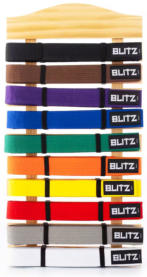


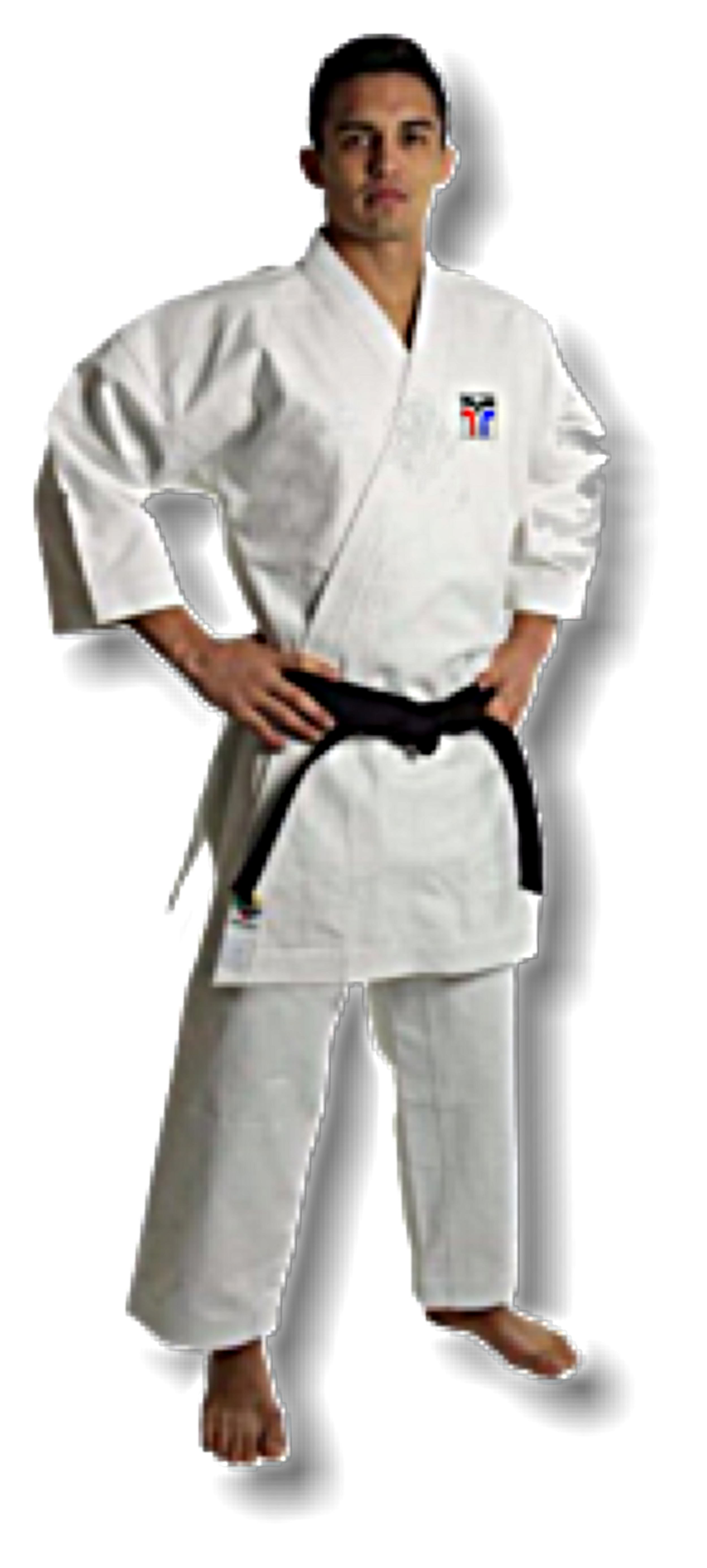
KARATE





Because childrens’ bodies
are proportionately
different to an adult, Gis
for Children are cut
differently and it is wise to
get one that is a little
bigger than fitting perfectly.
Belts


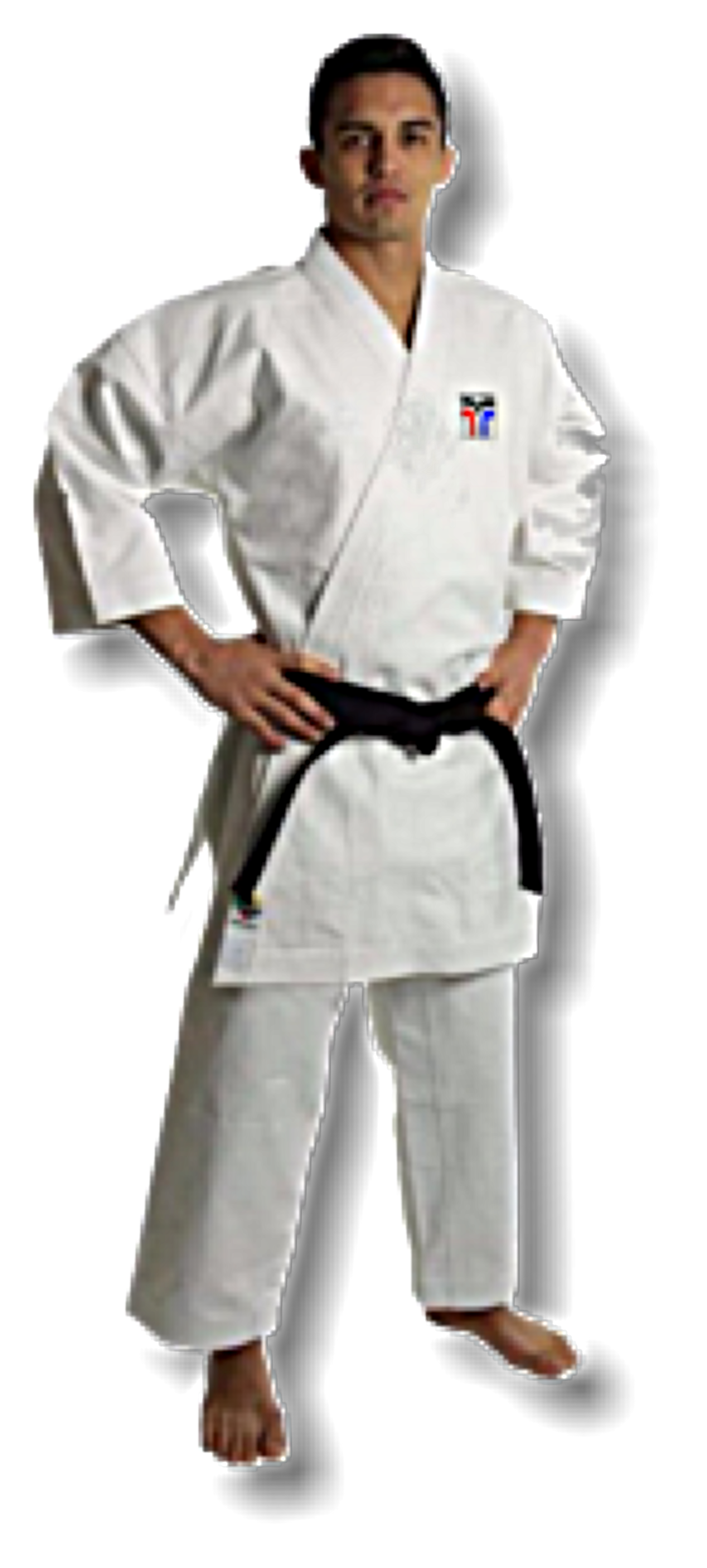

NSPCC
KARATE
Chief IKC Instructor/Coach Profile
Lesley Constable - Darrington BA (Hons)
6th Dan Wado-Ryu & 1st Dan Shotokan
Some of Lesley’s many Karate Awards
Major Titles and Medals including
FOUR World titles;
18 British
and
6 English Titles
.
Sensei Lesley has been practising Karate since she was
12 years old.
Click on
images to
enlarge
London Borough Barking and Dagenham
‘Coach of the Year 2002’
London Borough Redbridge
‘Sports Person of the Year’ (1994 & 1999)
British Universities Karate Championships 1999
Competitor of tournament award
Combat Magazine ‘Competitor of the Event Award’
(English Karate Championships 1993)
Professional Sports Coach
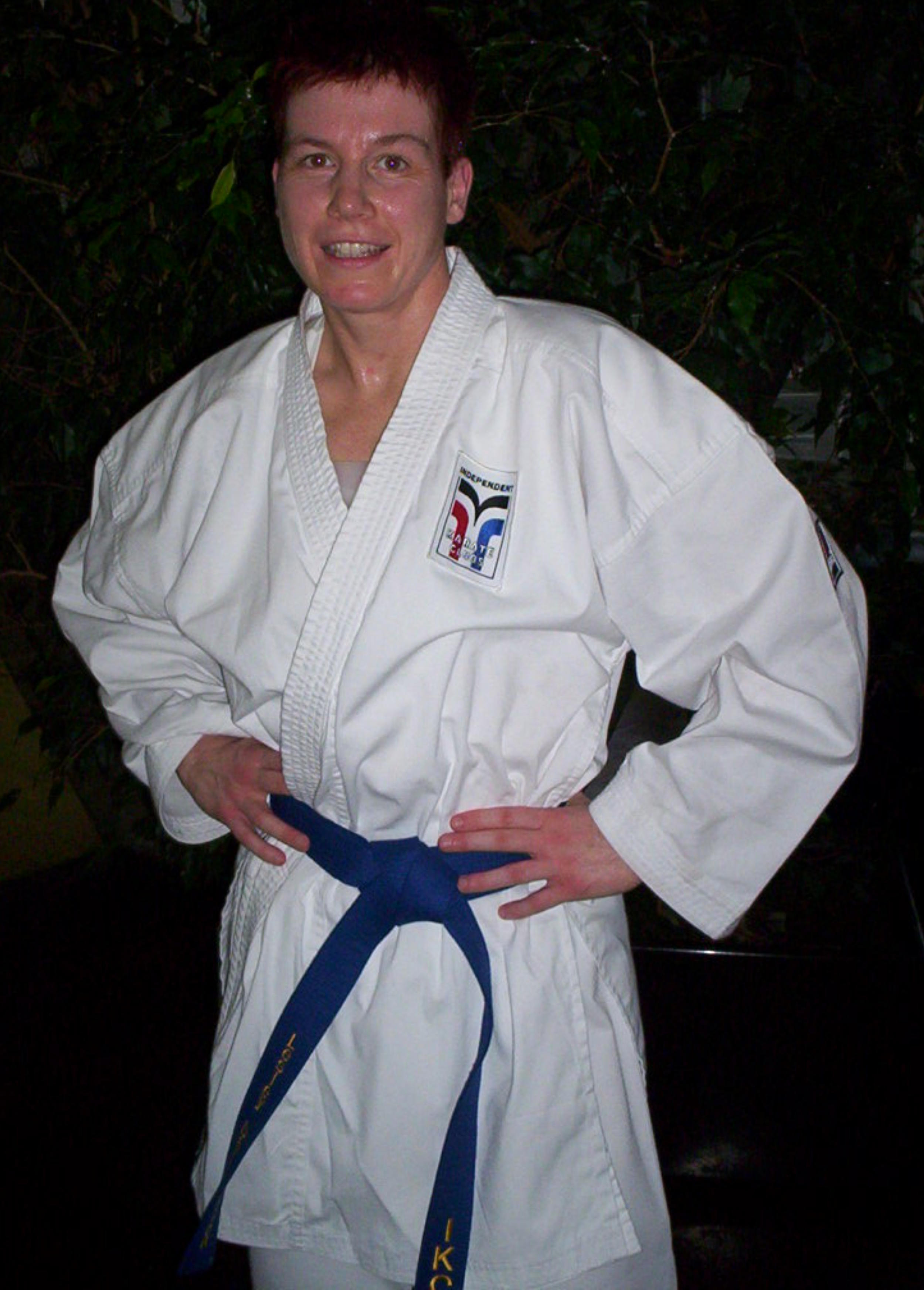


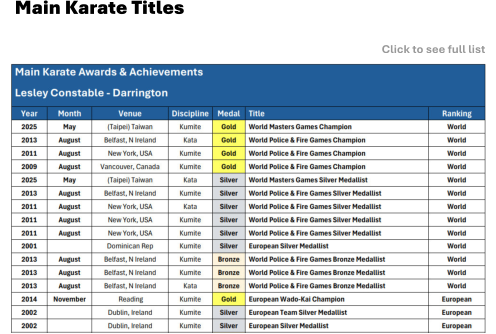
•
BA (Hons) in Cultural Studies and a teaching qualification.
•
City & Guilds Certificate in Recreation & Leisure (level 3 with distinction)
•
Commendation for Bravery Award as a Met Police Officer
•
Honours Award achieving Top Marks in Policing exams.
•
Retired Metropolitan Police Trainer
•
SEN Secondary School Teacher
•
A Qualified Youth Worker
These are just a few of her life experiences
- Home
- IKC History
- Introduction to Karate
- Karate History
- Other Karate Styles
- Coaching
- Training
- What Will You Learn
- Fitness
- Diversity
- Coaching Children
- Coaching Children Cont'd
- Smart Ideas
- Competition Karate
- Kumite Etiquette
- Kumite Tactics Brief Guide
- Join a Club
- IKC Membership
- IKC Contacts
- Safegurding Contacts
- IKC Documents Policies
- Clothing Equipment
- Chief IKC Instructor Profile
- Senior IKC Instructor Profile
- Info & other sites
KARATE
Chief IKC Instructor/Coach Profile
Lesley Constable - Darrington BA (Hons)
6th Dan Wado-Ryu & 1st Dan Shotokan
Sensei Lesley has been
practising Karate since
she was 12 years old.
Click on
images to
enlarge
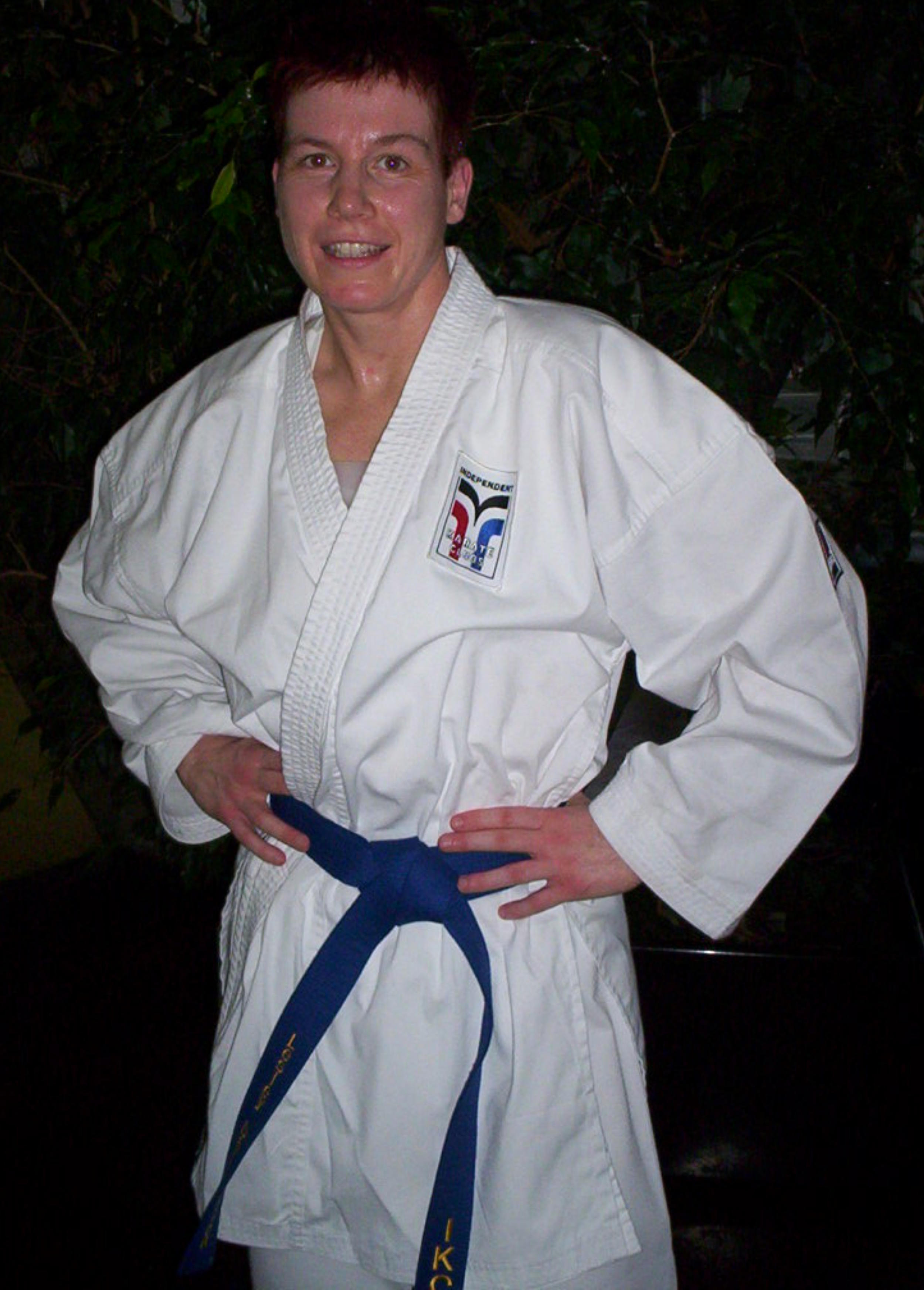
•
BA (Hons) in Cultural Studies and a teaching qualification.
•
City & Guilds Certificate in Recreation & Leisure (level 3
with distinction)
•
Commendation for Bravery Award as a Met Police Officer
•
Honours Award achieving Top Marks in Policing exams.
•
Retired Metropolitan Police Trainer
•
SEN Secondary School Teacher
•
A Qualified Youth Worker


- Home
- IKC History
- Introduction to Karate
- Karate History
- Other Karate Styles
- Coaching
- Training
- What Will You Learn
- Fitness
- Diversity
- Coaching Children
- Coaching Children Cont'd
- Smart Ideas
- Competition Karate
- Kumite Etiquette
- Kumite Tactics Brief Guide
- Join a Club
- IKC Membership
- IKC Contacts
- Safegurding Contacts
- IKC Documents Policies
- Clothing Equipment
- Chief IKC Instructor Profile
- Senior IKC Instructor Profile
- Info & other sites
NSPCC
KARATE
Senior IKC Instructor/Coach Profile
Colin Constable BA (Hons)
4th Dan Wado-Ryu
Karate Achievements
Main Karate Titles
Many
Club
and
Association
competition
successes including the following:
Sensei Colin has been practising Karate for over forty years
These are just a few of his life experiences
•
BA (Hons) QTS (First) D & Technology
•
Advanced Certificate in Education Research (Cambridge)
•
Advanced GNVQ Leisure and Tourism (with Distinction)
•
Secondary School Teacher
•
Gifted & Talented Co-ordinator (KS3, 4, 5)
•
YMCA Qualified Fitness Trainer
•
Qualified Youth Worker
Click on images to enlarge
1986
BMAF Open Championships
Kumite - Gold Medal
1987
BMAF Open Championships
Kumite - Gold Medal
1988
BOSKF Open Championships
Kumite - Silver Medal
1988
Bavarian Shotkan Cup
Kumite - Silver Medal
1990
Rangahir Invitation
Kumite - Silver Medal, Team Kumite - Silver Medal
1991
Uxbridge Invitation Championships
Kumite - Silver Medal, Team Kumite - Gold Medal
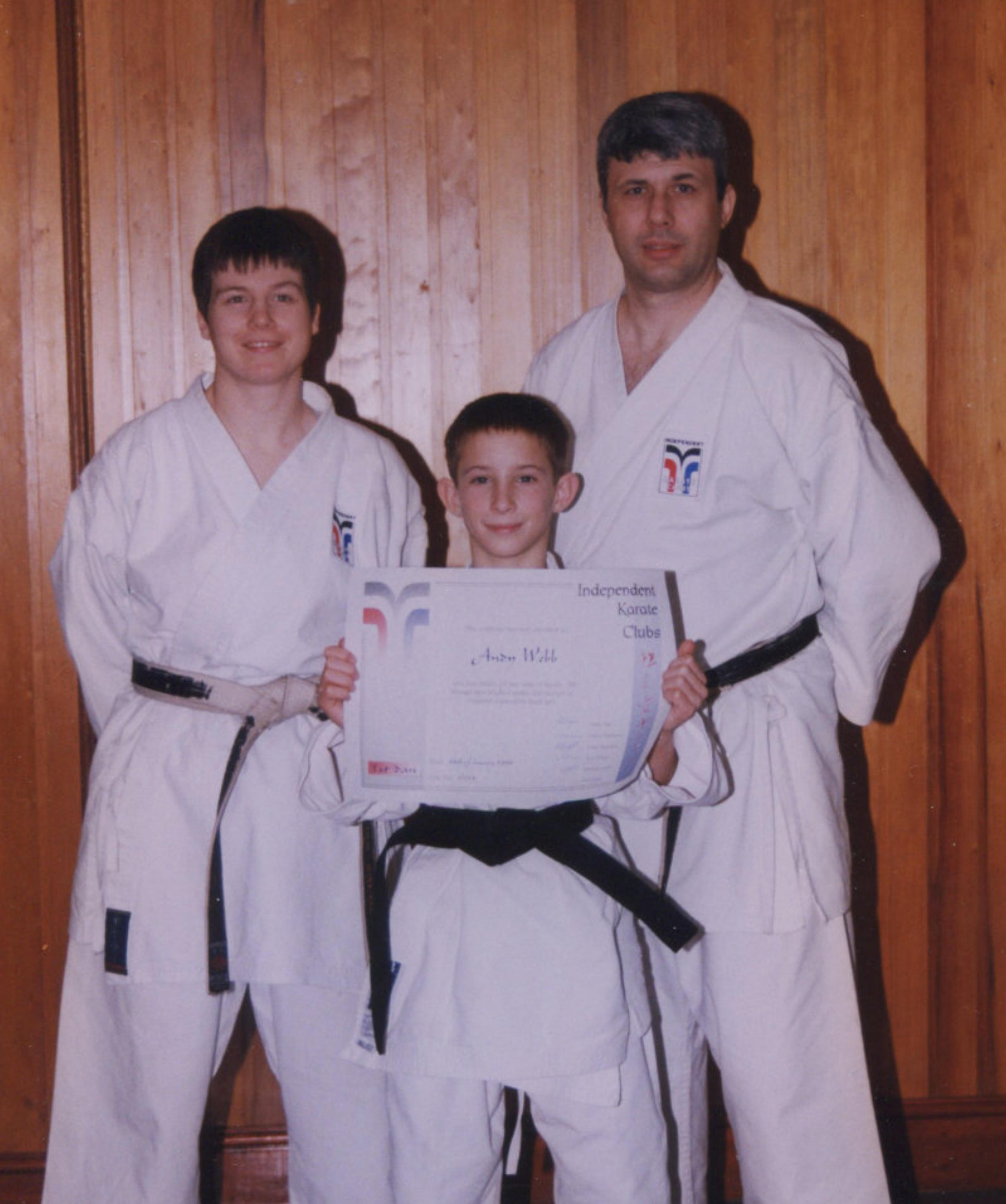
London Borough Barking and Dagenham
LBYG ‘Coach of the Year 2000’
England and British Referee
Professional Sports Coach

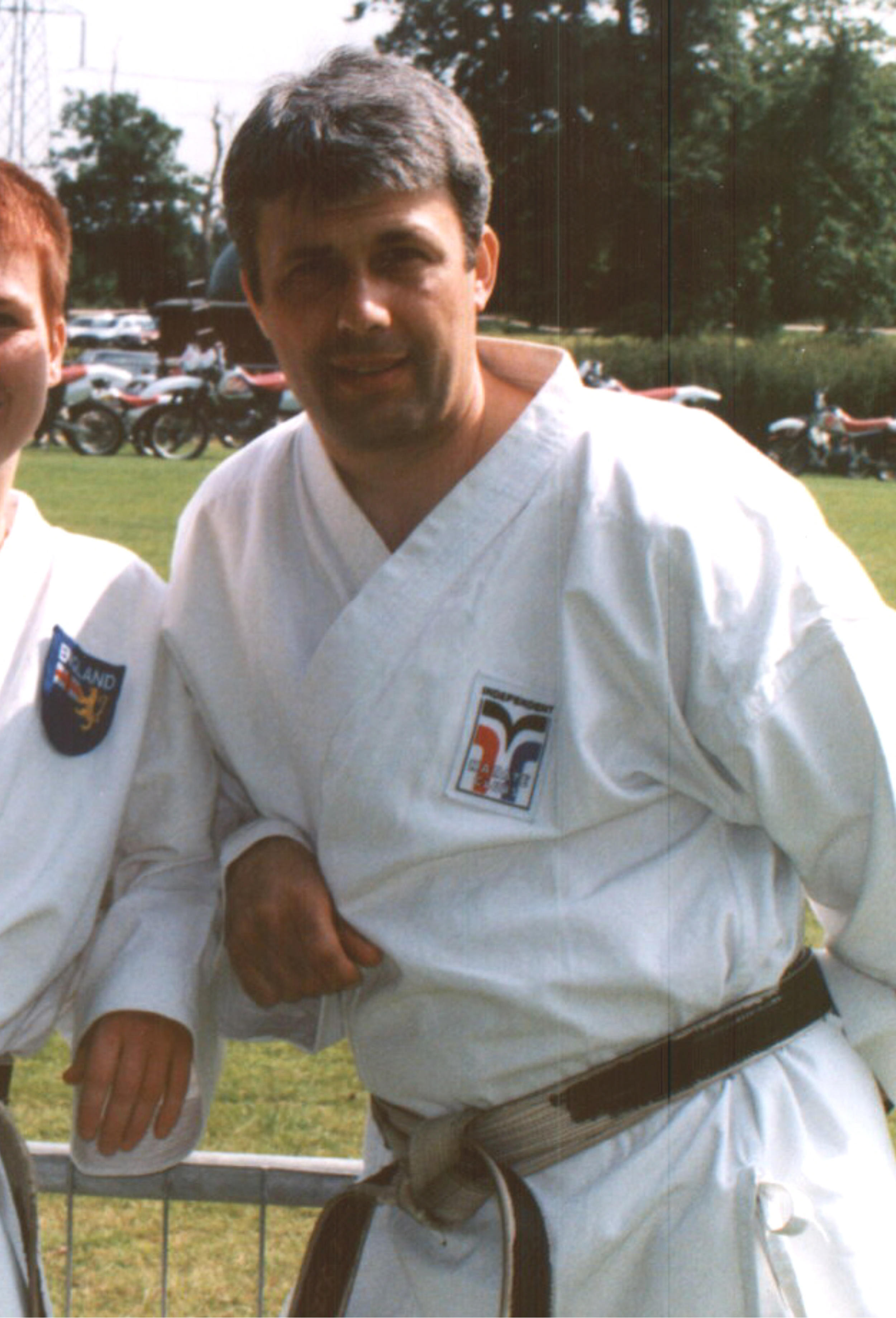

Info & Useful Sites
- Home
- IKC History
- Introduction to Karate
- Karate History
- Other Karate Styles
- Coaching
- Training
- What Will You Learn
- Fitness
- Diversity
- Coaching Children
- Coaching Children Cont'd
- Smart Ideas
- Competition Karate
- Kumite Etiquette
- Kumite Tactics Brief Guide
- Join a Club
- IKC Membership
- IKC Contacts
- Safegurding Contacts
- IKC Documents Policies
- Clothing Equipment
- Chief IKC Instructor Profile
- Senior IKC Instructor Profile
- Info & other sites
KARATE
Senior IKC Instructor/Coach Profile
Colin Constable BA (Hons)4th Dan Wado-Ryu
Karate Achievements
Main Karate Titles
Many
Club
and
Association
competition
successes including the following:
Sensei Colin has been practising Karate for over forty years
•
BA (Hons) QTS (First) D & Technology
•
Advanced Certificate in Education Research (Cambridge)
•
Advanced GNVQ Leisure and Tourism (with Distinction)
•
Secondary School Teacher
•
Gifted & Talented Co-ordinator (KS3, 4, 5)
•
YMCA Qualified Fitness Trainer
•
Qualified Youth Worker
Click on images to enlarge
1986
BMAF Open Championships
Kumite - Gold Medal
1987
BMAF Open Championships
Kumite - Gold Medal
1988
BOSKF Open Championships
Kumite - Silver Medal
1988
Bavarian Shotkan Cup
Kumite - Silver Medal
1990
Rangahir Invitation
Kumite - Silver Medal
Team Kumite - Silver Medal
1991
Uxbridge Invitation Championships
Kumite - Silver Medal
Team Kumite - Gold Medal
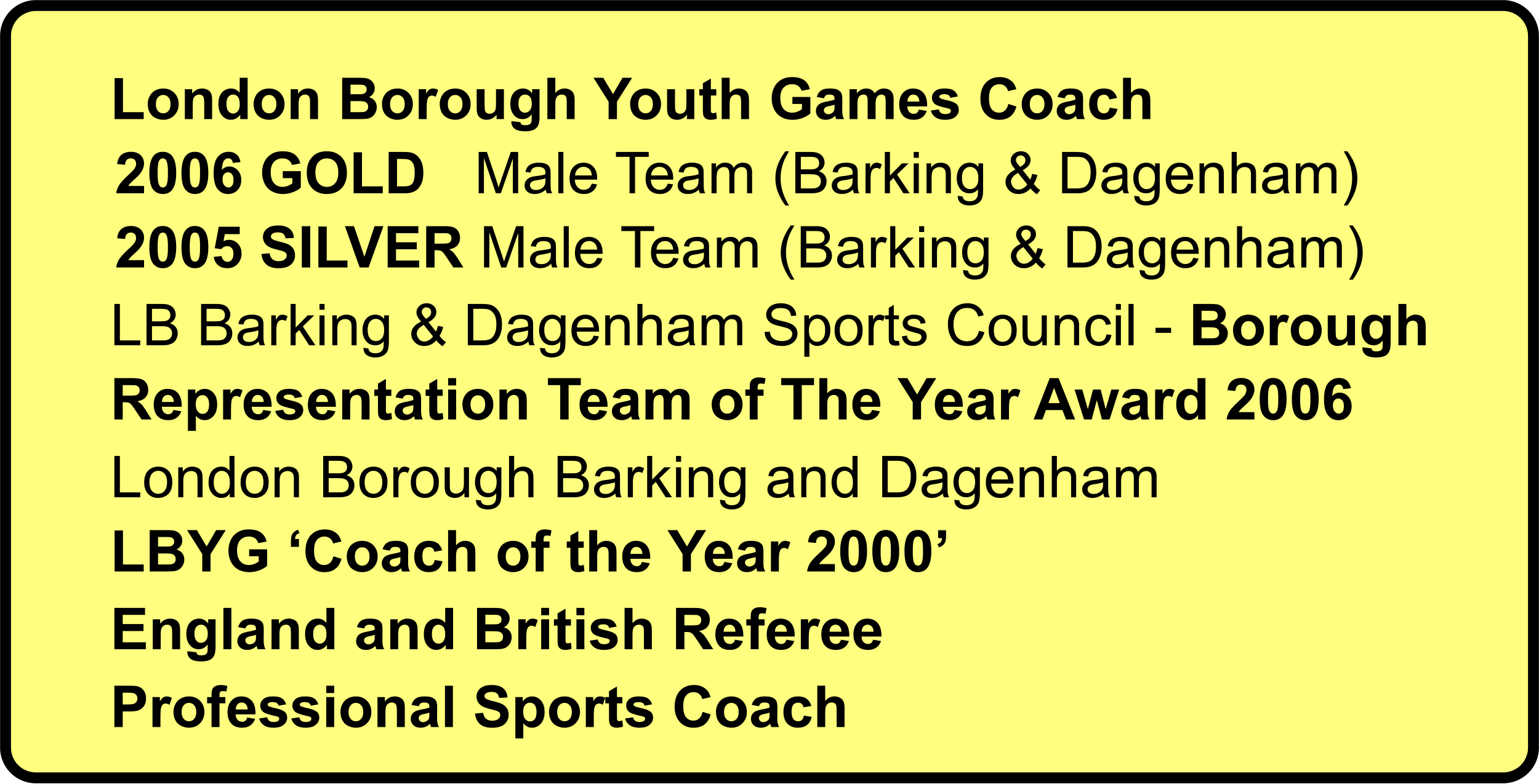

- Home
- IKC History
- Introduction to Karate
- Karate History
- Other Karate Styles
- Coaching
- Training
- What Will You Learn
- Fitness
- Diversity
- Coaching Children
- Coaching Children Cont'd
- Smart Ideas
- Competition Karate
- Kumite Etiquette
- Kumite Tactics Brief Guide
- Join a Club
- IKC Membership
- IKC Contacts
- Safegurding Contacts
- IKC Documents Policies
- Clothing Equipment
- Chief IKC Instructor Profile
- Senior IKC Instructor Profile
- Info & other sites
NSPCC
KARATE
Information & Useful Sites



‘Click’ on logo to enter Websites



Share Our
IKC Website










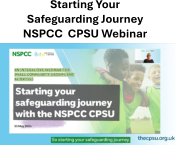



- Home
- IKC History
- Introduction to Karate
- Karate History
- Other Karate Styles
- Coaching
- Training
- What Will You Learn
- Fitness
- Diversity
- Coaching Children
- Coaching Children Cont'd
- Smart Ideas
- Competition Karate
- Kumite Etiquette
- Kumite Tactics Brief Guide
- Join a Club
- IKC Membership
- IKC Contacts
- Safegurding Contacts
- IKC Documents Policies
- Clothing Equipment
- Chief IKC Instructor Profile
- Senior IKC Instructor Profile
- Info & other sites
KARATE
Information & Useful Sites

Useful Information



‘Click’ on logo to enter Websites
















- Home
- IKC History
- Introduction to Karate
- Karate History
- Other Karate Styles
- Coaching
- Training
- What Will You Learn
- Fitness
- Diversity
- Coaching Children
- Coaching Children Cont'd
- Smart Ideas
- Competition Karate
- Kumite Etiquette
- Kumite Tactics Brief Guide
- Join a Club
- IKC Membership
- IKC Contacts
- Safegurding Contacts
- IKC Documents Policies
- Clothing Equipment
- Chief IKC Instructor Profile
- Senior IKC Instructor Profile
- Info & other sites